
Solutions
Roof and Gutter De-icing
Stop ice dams and frozen gutters by keeping a clear path for meltwater, from the roof edge to the bottom of the downspout.
The problem: ice dams and icicles
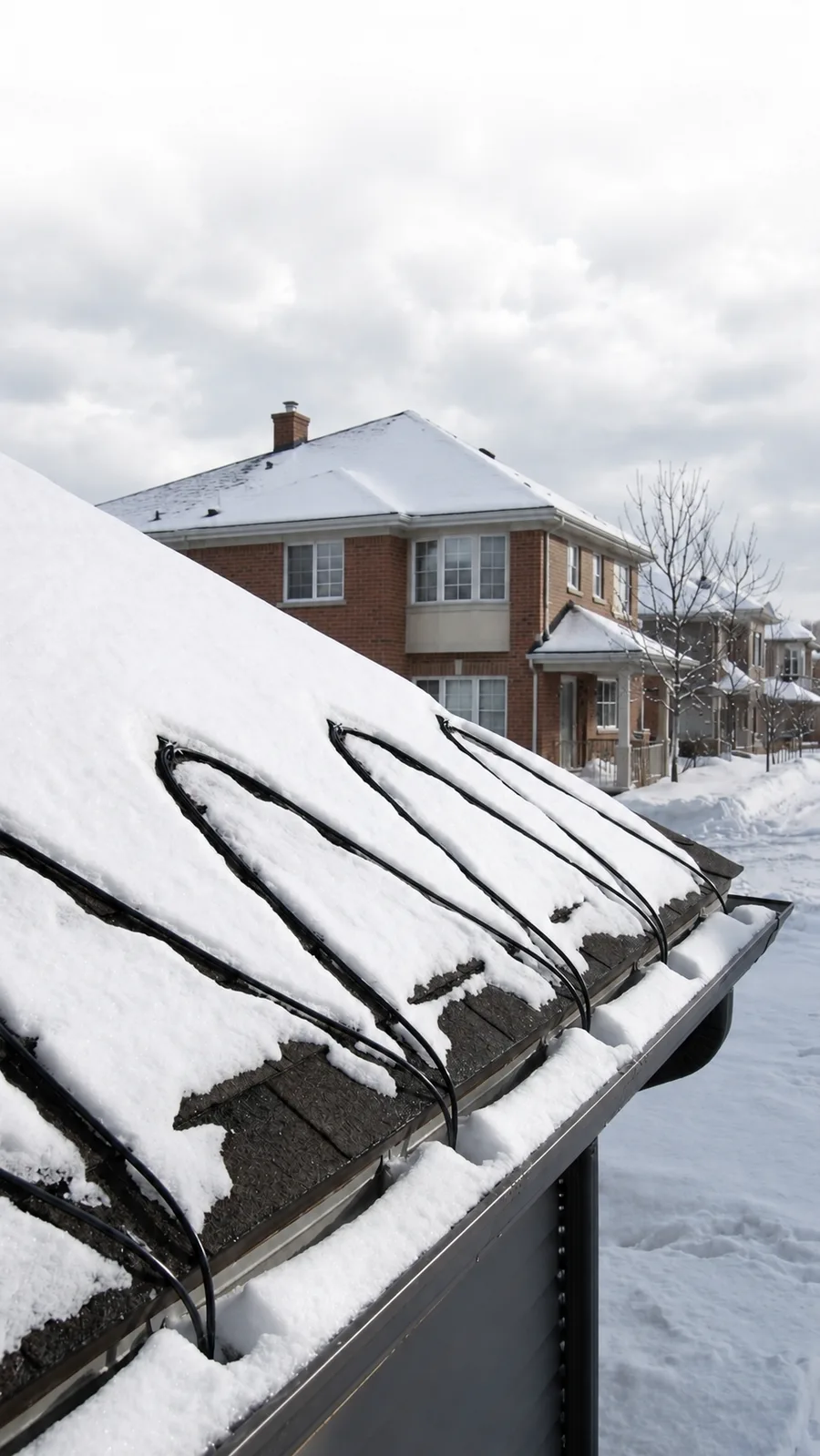
Heat escaping through the roof melts the snow on the upper slope. The water runs down to the cold eave, freezes again, and builds a ridge of ice: an ice dam.
Water backs up behind the dam, under the shingles and into ceilings and walls. Gutters and downspouts fill with ice, pull away from the fascia, and drop heavy icicles over doors and walkways.
Heat tracing doesn’t melt the whole roof. It keeps a channel open along the edge, through the gutter, and down the downspout, so meltwater drains away before it can refreeze.
How we solve it
A roof and gutter system covers the whole path the water takes.
Roof edge
DSR-RGS-12 runs in a zigzag along the eave, held by roof clips, to open drainage channels through the snow. Valleys get a run too.
Gutters
A run inside the gutter keeps it clear, so the water from the roof edge reaches the downspout.
Downspouts
The cable runs the full length of each downspout, hung from a downspout hanger, so the outlet can’t freeze shut.
Control and protect
A snow and ice controller with a gutter or aerial sensor runs the cable only when it’s needed, and every circuit needs ground-fault protection.
The technology: self-regulating cable
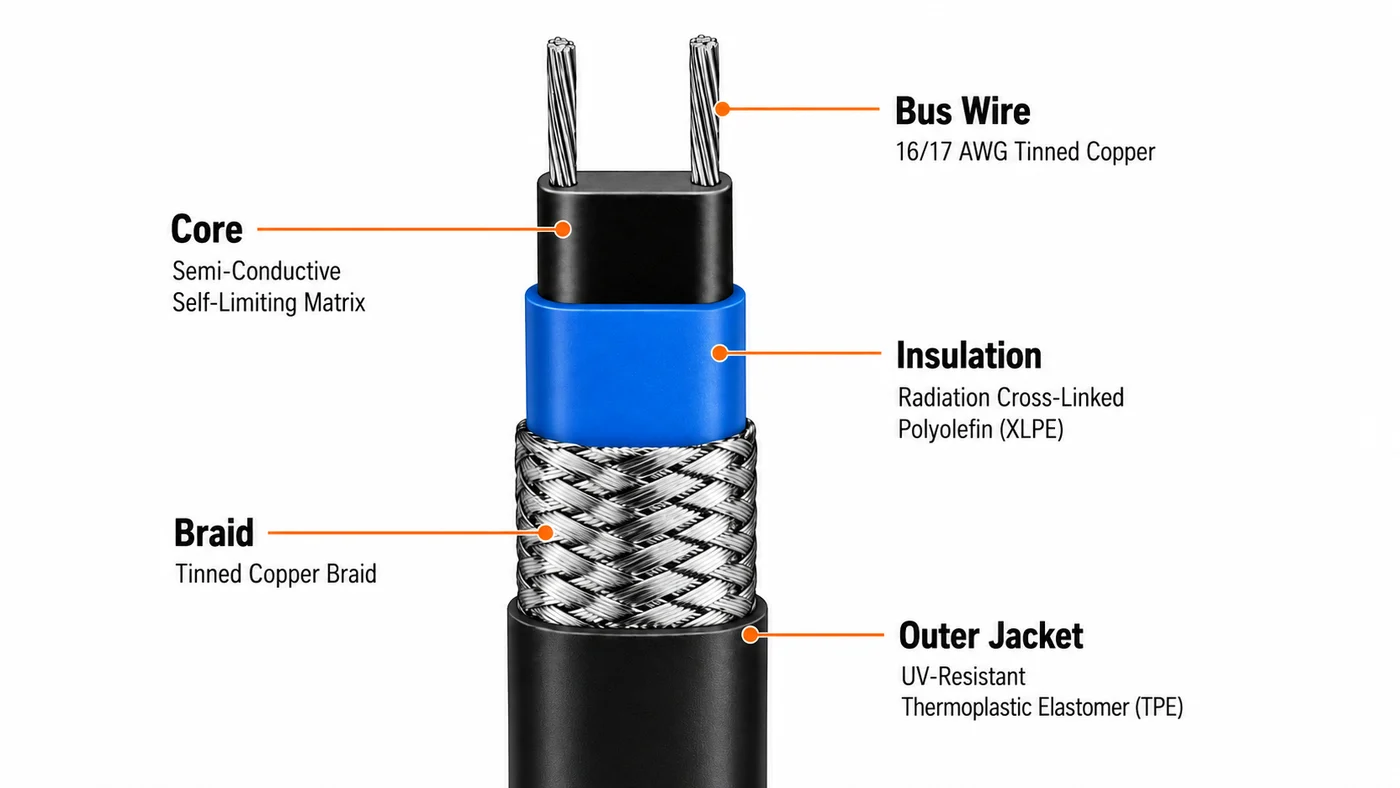
Like our pipe cable, DSR-RGS-12 has a semi-conductive core between two bus wires that makes more heat as it gets colder. On a roof, that means more heat where the cable lies in snow and ice than where it’s in dry air or sunshine.
It’s safe to overlap and to cut to length on the roof, and its UV-resistant jacket is made to stay outdoors in the sun year-round.
DSR-RGS-12 at a glance
Supply voltage
110–120 V or 208–240 V ac
In ice or snow at 0 °C
12 W/ft
In air at 0 °C
10 W/ft
Outer jacket
UV-resistant TPE
Min. installation temp.
−20 °C (−4 °F)
Max. circuit size
30 A
Measure your roof edges, gutters, valleys, and downspouts, and the calculators work out the cable length and the breaker.
Cable construction
Five layers, from the inside out:
- Bus wires: two 16 AWG tinned-copper conductors carry the current along the whole length.
- Core: the semi-conductive, self-limiting polymer that makes the heat.
- Insulation: radiation cross-linked polyolefin (XLPE) seals the core electrically.
- Braid: an optional tinned-copper braid gives the ground path that ground-fault protection relies on, and adds mechanical protection.
- Outer jacket: a thermoplastic elastomer (TPE) with a UV inhibitor, for years on a sunny roof.
Our products, and why
One system from the roof edge to the downspout, made to work together: the cable, a kit to connect it to power, clips and hangers to hold it, kits to splice and branch it, and a seal for each end.
- DSR-RGS-12 cable for roof edges, valleys, gutters, and downspouts.
- DPRK or DPTK kit to connect it to power.
- DRCK roof clips and downspout hangers to hold it in place.
- DSK and DSTK kits to join cables and branch at tees.
- DEK end seal to close each end safely.
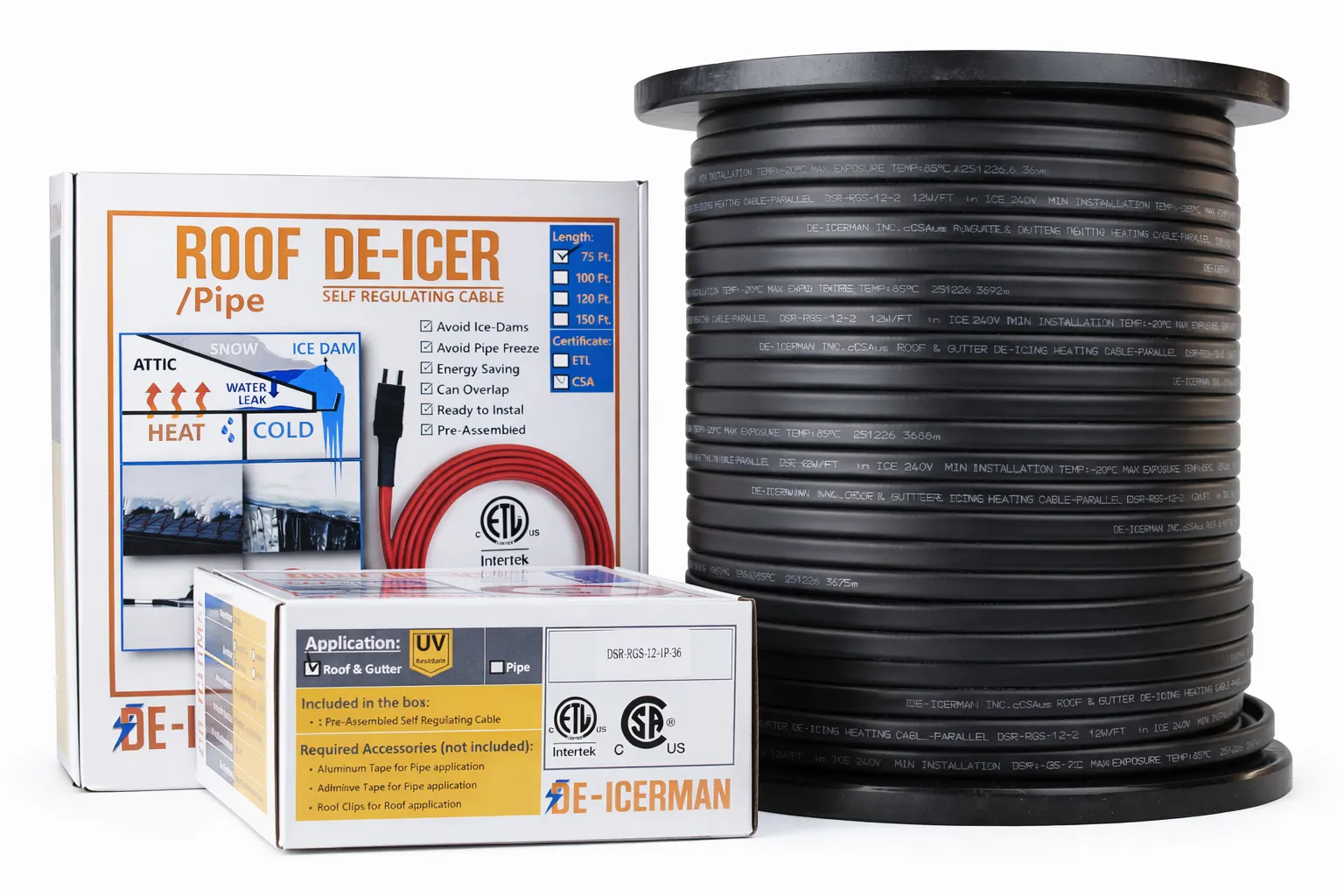
DSR-RGS-12
Self-regulating roof and gutter heat-trace cable that helps prevent ice dams and icicle formation.
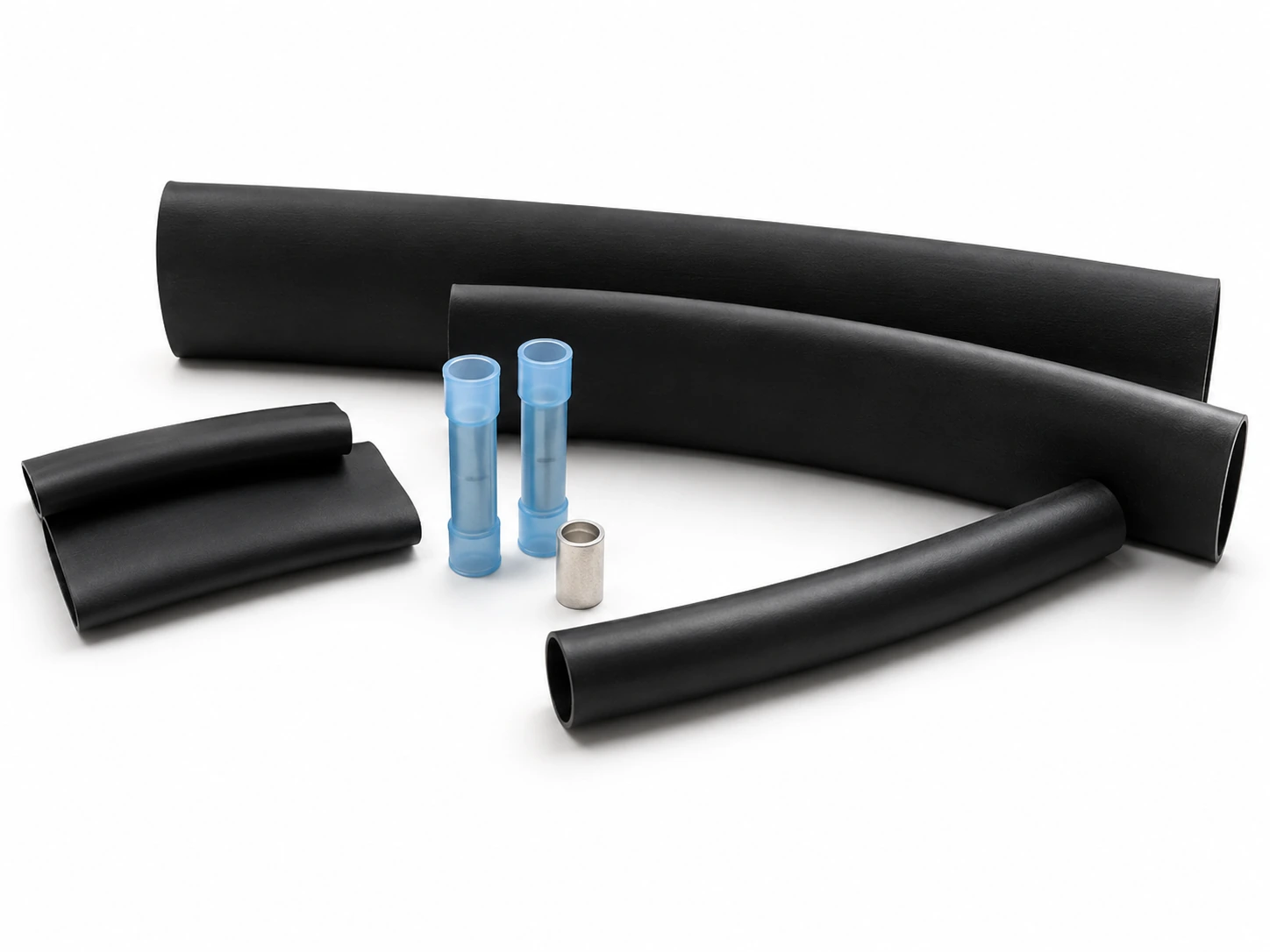
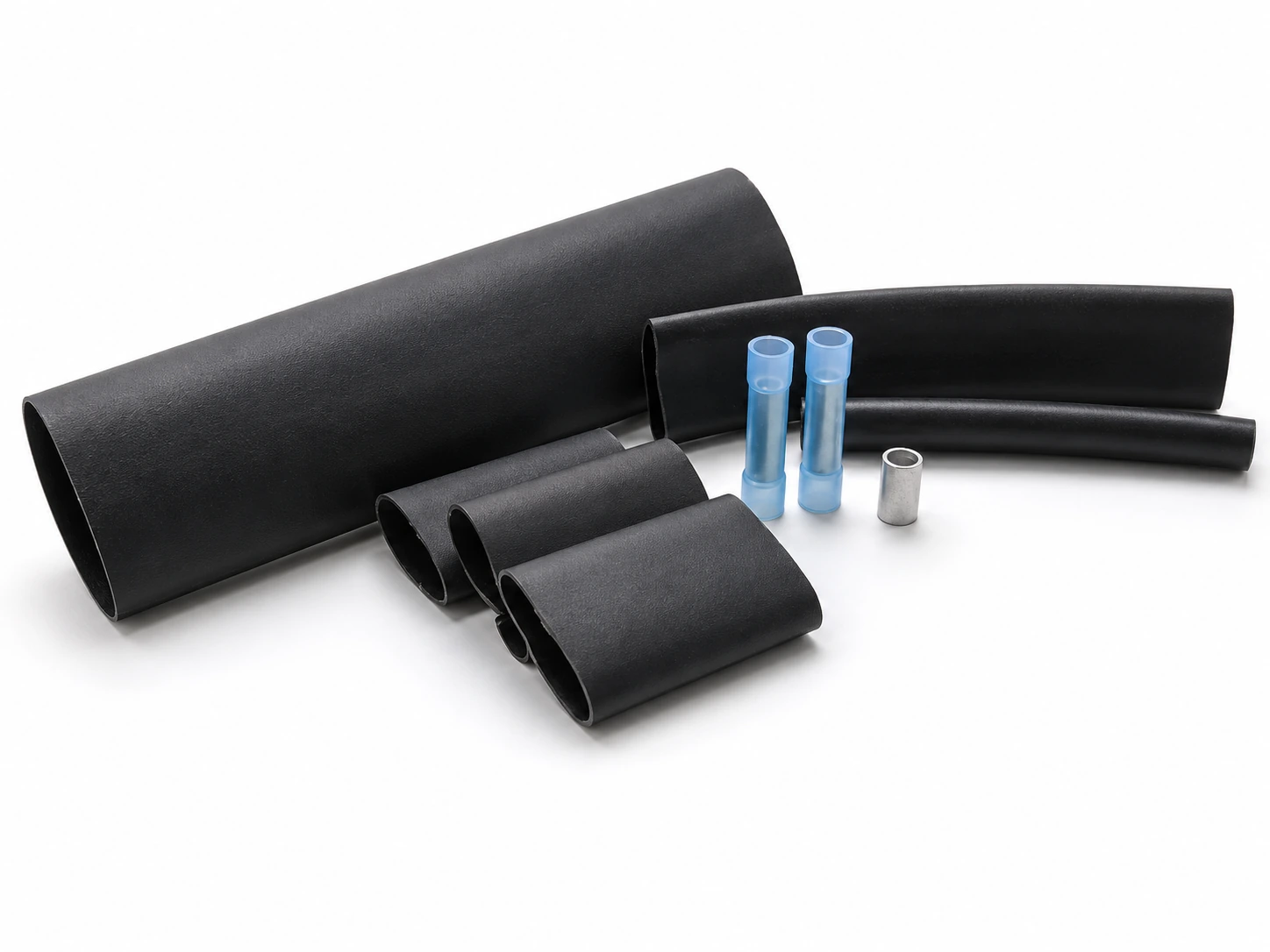
DSTK
Splice or tee connection kit for joining DSR-PFP and DSR-RGS heating cable runs.
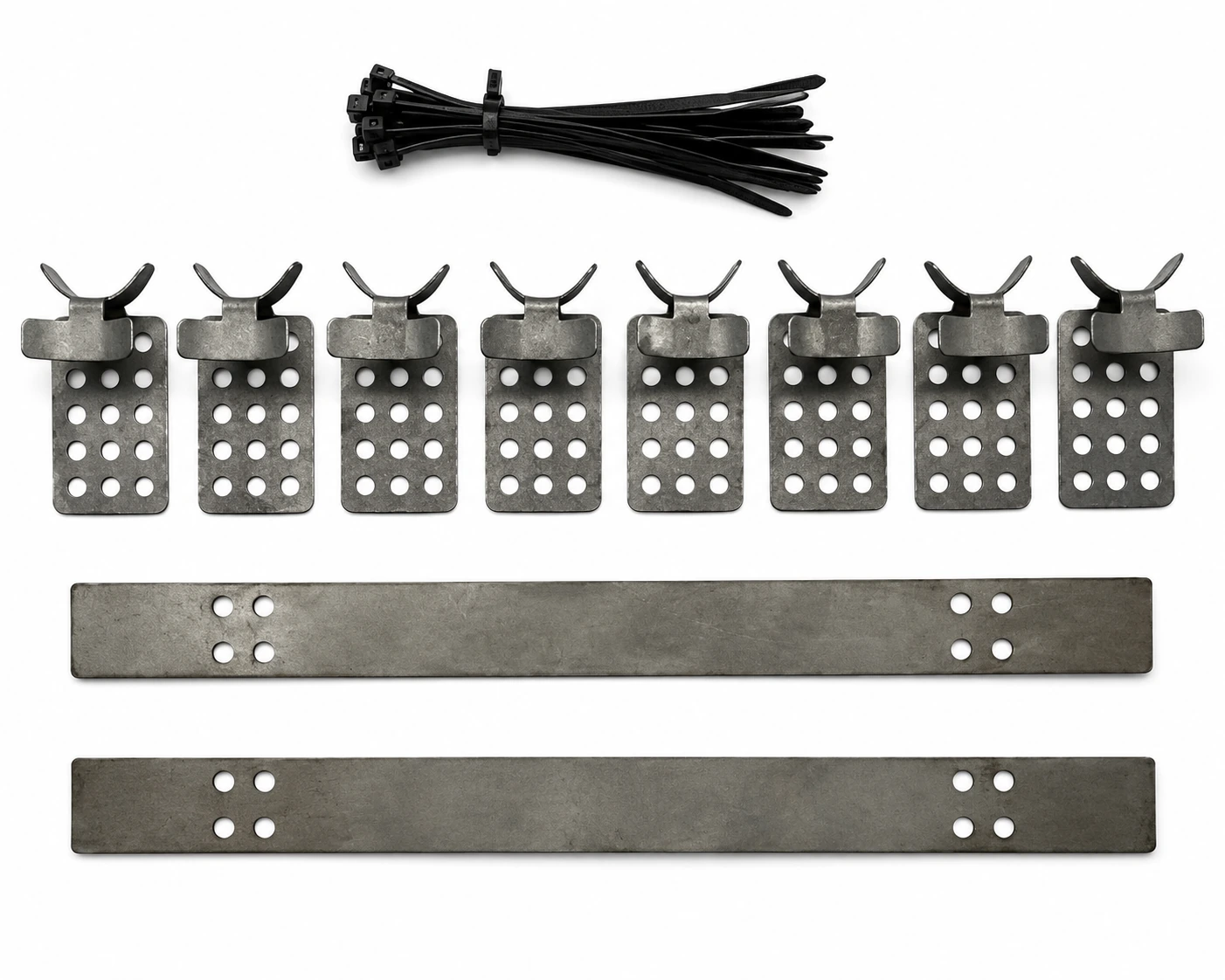
DSK
Splice connection kit for joining DSR-PFP and DSR-RGS heating cable runs.
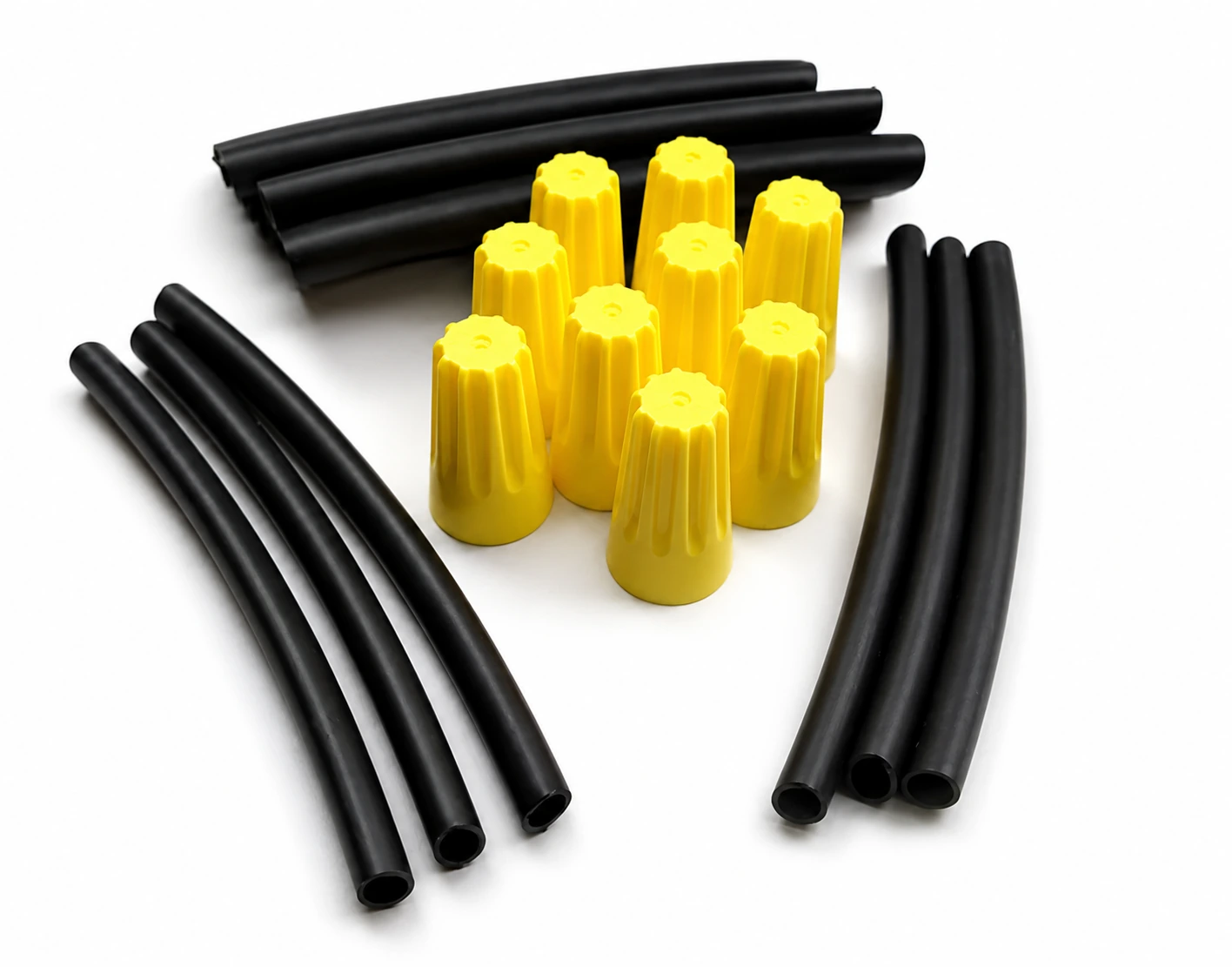
DRCK
Roof clips and downspout hanger for securing DSR-RGS heating cable to roofs and gutters.
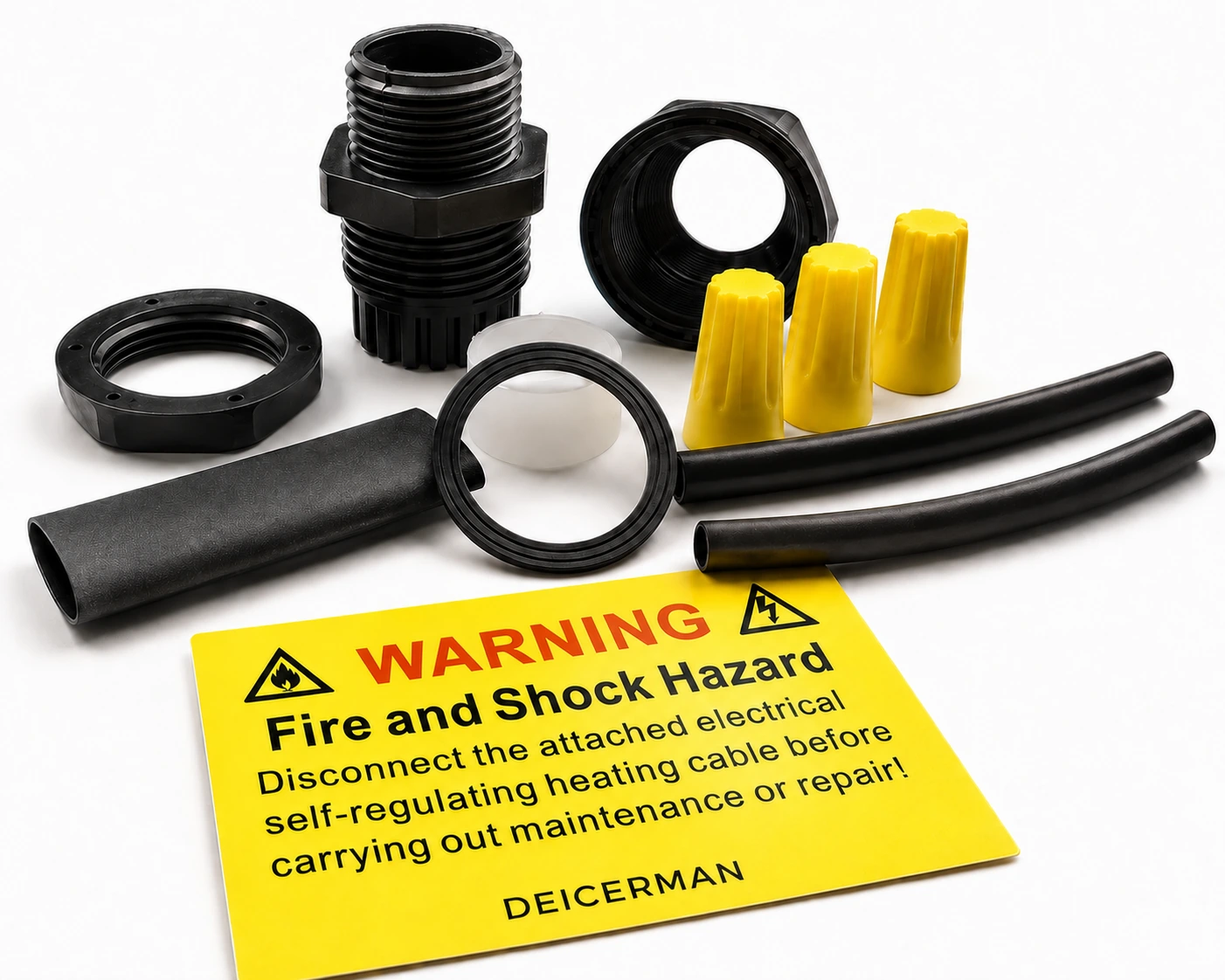
DPTK
Power end termination kit for heating cable installations, terminated inside a listed outlet box.
DPRK
Watertight junction-box entry with cable seals for power and end terminations.
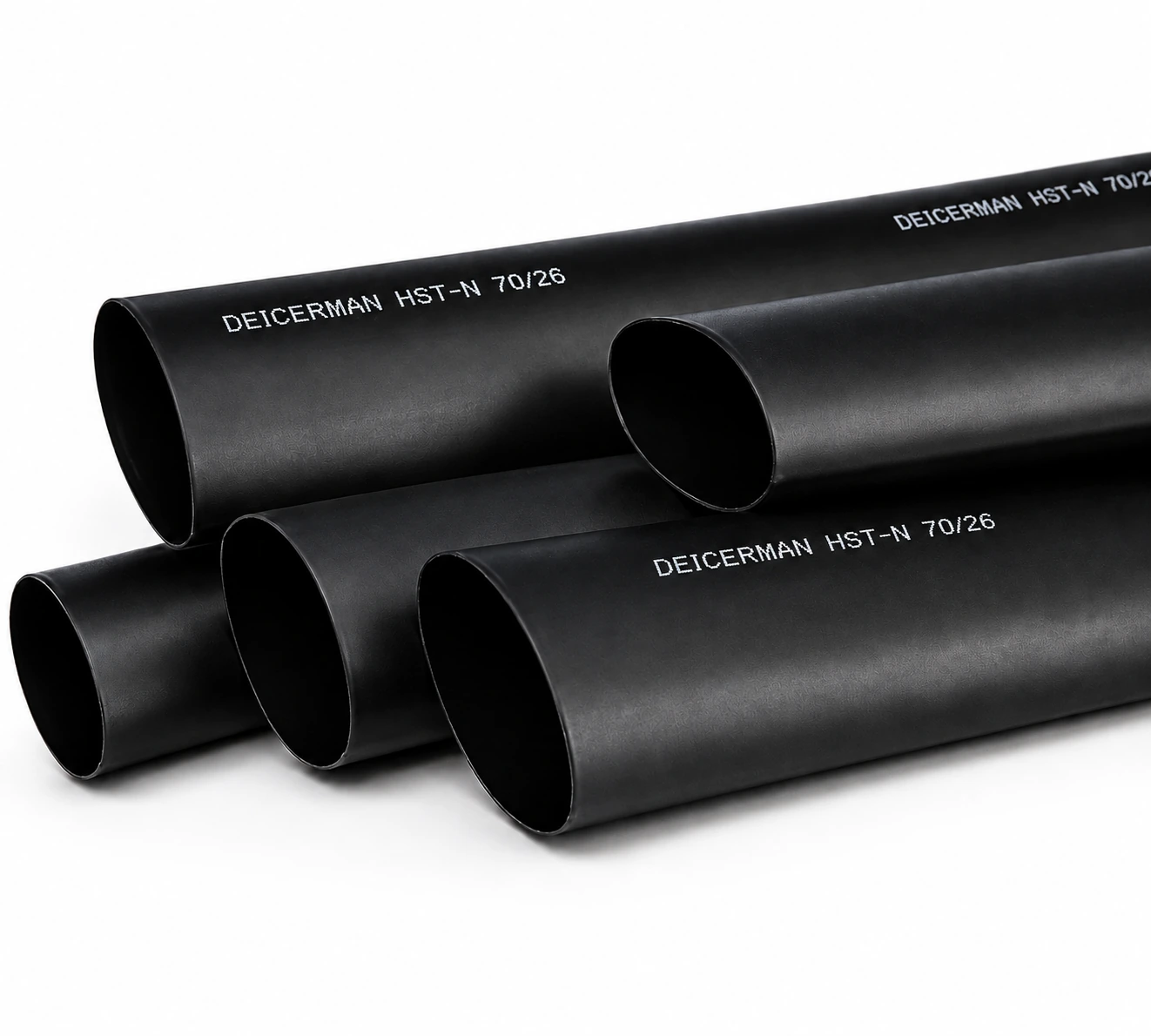
DEK
End seal kit for terminating DSR-PFP and DSR-RGS heating cable ends.
Controls and sensors for roofs and gutters
A controller with a gutter or aerial sensor turns the cable on only when there’s moisture near freezing, instead of all winter. These are the models we carry for roof and gutter systems, with their documents.
Roof and gutter controllers · ASE

Rain and snow controller with a remote moisture sensor on a cable. For roofs, the sensor head can be mounted in the gutter against the fascia board or near the top of the downspout, where the ice forms. It switches the cable on when it’s wet near freezing, and keeps it on for a set time after.
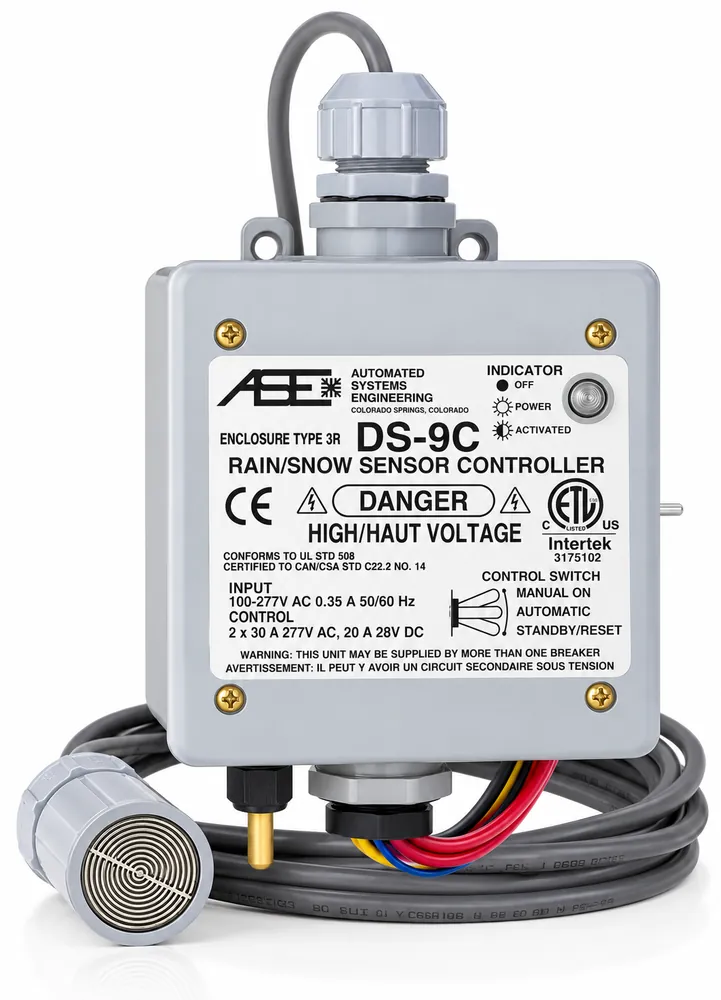
DS-9C
Two 30 A relays and a remote moisture sensor on a cable, which can be mounted in a gutter against the fascia for roof and gutter de-icing, or wherever it best sees the weather.
View product DS-9C
Roof and gutter controllers · ETI Snow Switch

Control panels that work with ETI’s separate snow and ice sensors (below). They heat only when there’s moisture below 38 °F (3.3 °C), keep heating with a hold-on timer until the surface is clear, and work with self-regulating and constant-wattage cables.
Snow and ice melt control panels
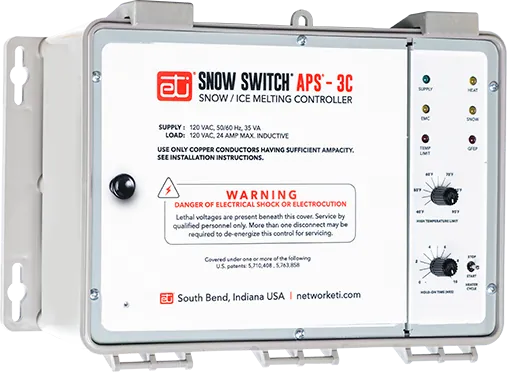
APS-3C
Panel for up to six sensors, with a 0–10 hour hold-on timer and a high-limit thermostat. Switches up to 24 A at 120 or 240 V, or drives contactors for larger loads. No built-in ground-fault protection: choose the APS-4C where it’s needed.
- Data sheet (opens in a new tab)PDF (1.1 MB)
- Manual (APS-3C, APS-4C, SC-40C) (opens in a new tab)PDF (1.6 MB)
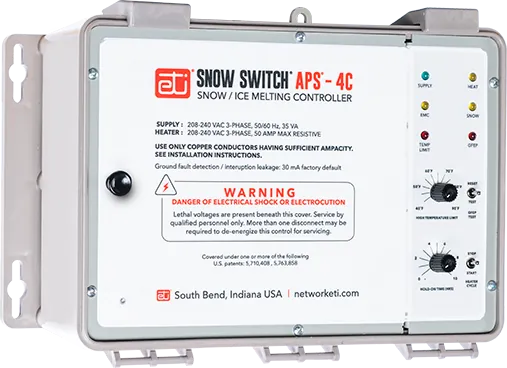
APS-4C
Commercial and industrial panel with built-in, self-testing ground-fault protection (30 mA, or 60 or 120 mA), up to six sensors, and three-phase supplies up to 600 V. Switches up to 50 A, and runs SC-40C satellite contactors for more zones.
- Data sheet (opens in a new tab)PDF (921 KB)
- Manual (APS-3C, APS-4C, SC-40C) (opens in a new tab)PDF (1.6 MB)
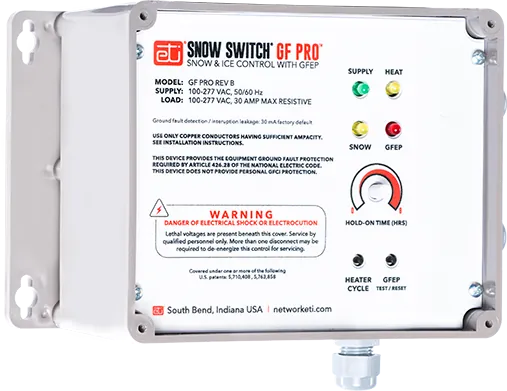
GF Pro
Compact controller for medium-sized systems, with built-in 30 mA ground-fault protection, two sensor inputs, a 0–8 hour hold-on timer, and a NEMA 4X enclosure. 100–277 V ac, up to 30 A.
View product GF Pro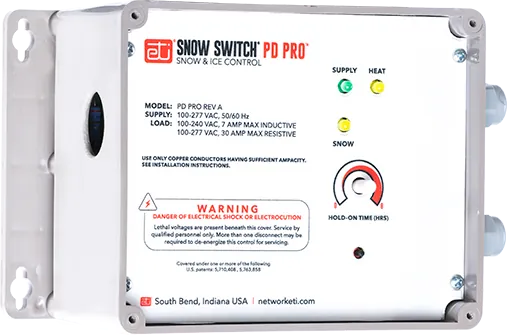
PD Pro
For systems with their own ground-fault protection: two sensor inputs, a 0–8 hour hold-on timer, and a NEMA 4X enclosure. Switches up to 30 A, or drives a contactor.
View product PD Pro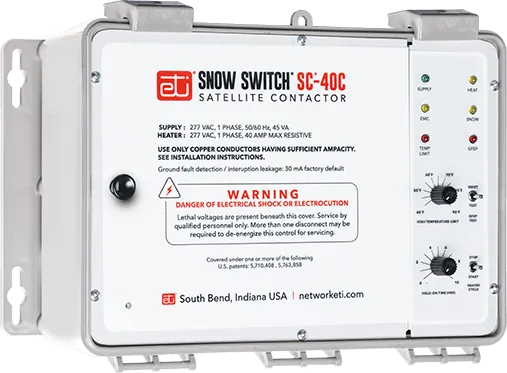
SC-40C
Satellite contactor that adds one more heating zone to an APS-4C, which acts as the master. Each SC-40C has its own 30 mA ground-fault protection and hold-on timer, so one faulty circuit doesn’t stop the rest.
- Data sheet (opens in a new tab)PDF (808 KB)
- Manual (APS-3C, APS-4C, SC-40C) (opens in a new tab)PDF (1.6 MB)
Roof and gutter sensors
Sensors tell a controller when to heat. Aerial sensors mount on a mast or roof and detect falling and blowing snow; pavement and gutter sensors sit where the ice forms.
Aerial
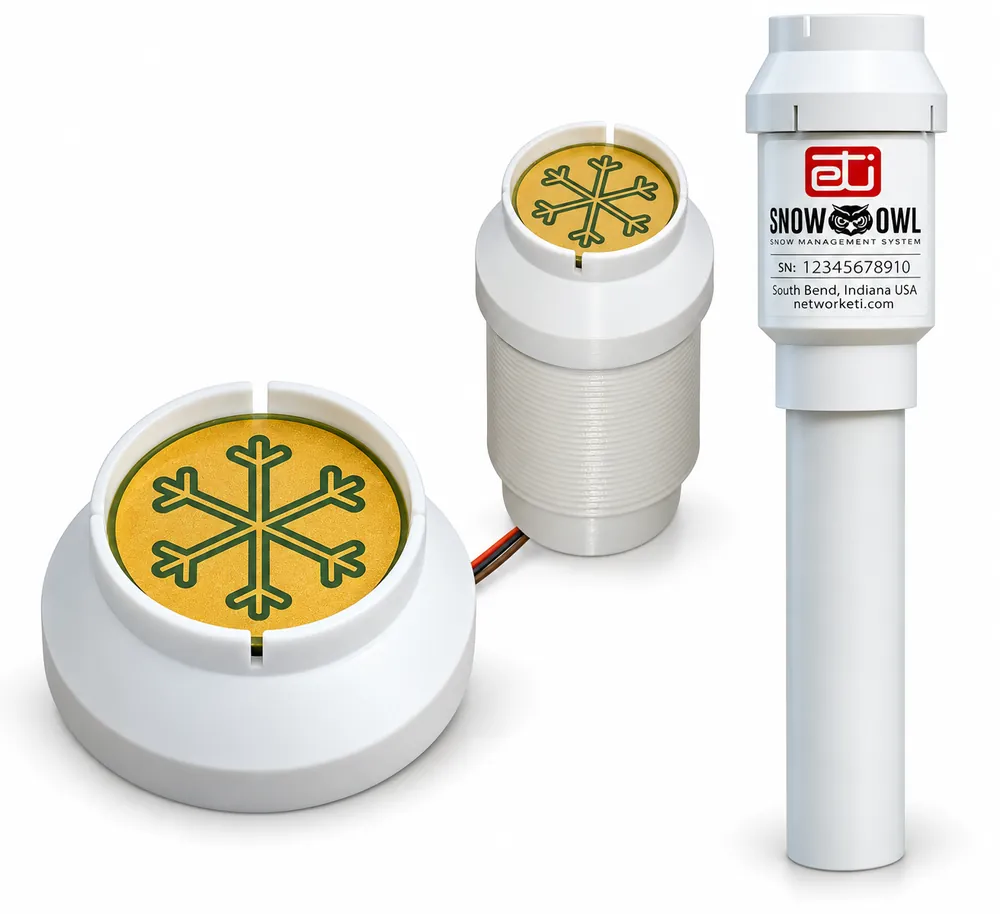
Snow Owl
Slim, low-voltage (24 V) aerial snow sensor on ¾-inch conduit, up to 2,000 ft from the controller. It calls for heat when it senses snow below 38 °F (3.3 °C) and holds on until melting is done. Works with ETI controllers and building automation.
- Installation guide (opens in a new tab)PDF (702 KB)
- Data sheet (opens in a new tab)PDF (337 KB)
- Manual (opens in a new tab)PDF (450 KB)
Pavement and gutter
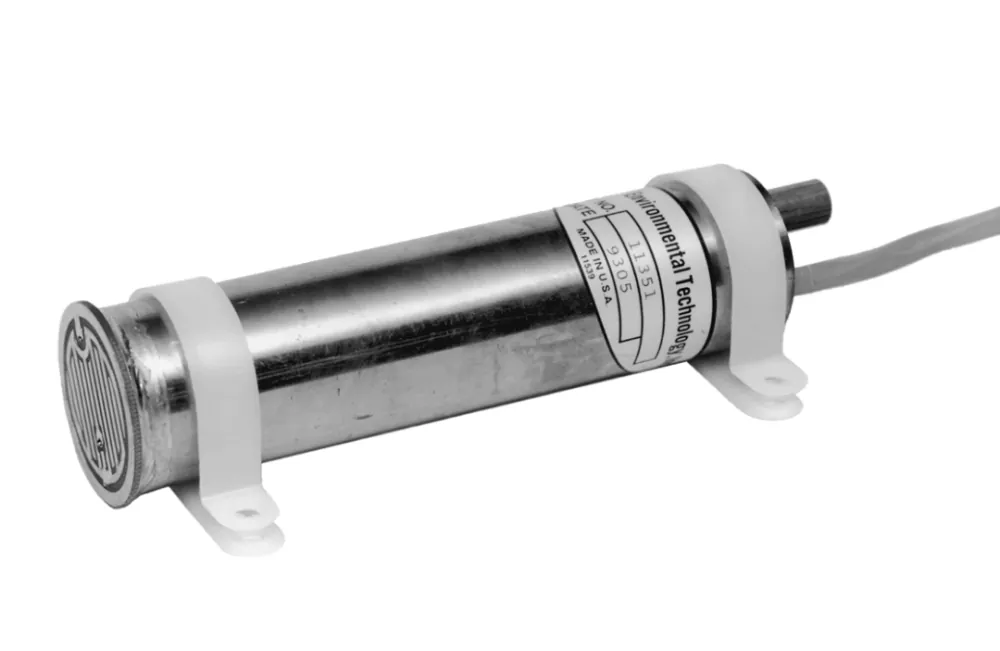
GIT-1
Gutter ice sensor that mounts in a gutter or downspout and senses moisture and temperature where the ice actually forms. Runs the heaters only below 38 °F (3.3 °C), up to 2,000 ft from an APS-3C or APS-4C.
View product GIT-1
Technical documents
Size your roof system
Enter your roof edges, gutters, and downspouts, and the calculators work out the cable length and the breaker. Or send us photos and measurements and we’ll do it for you.