
Solutions
Pipe Freeze Protection
Keep water lines flowing all winter with self-regulating heat-trace cable that puts out more heat where the pipe is colder, and less where it isn’t.
The problem: pipes that freeze
Water expands as it freezes. In a closed pipe, the pressure builds between the ice and the nearest tap until a fitting leaks or the pipe splits, often found only when it thaws and the water starts to run.
Lines in crawl spaces, garages, exterior walls, and outdoors are most at risk. Insulation alone only slows the heat loss: in a long cold spell, the water still reaches 0 °C.
Heat tracing replaces the heat the pipe loses, so the water stays above freezing for as long as the cold lasts.
How we solve it
A complete pipe freeze protection system has four parts.
Trace the pipe
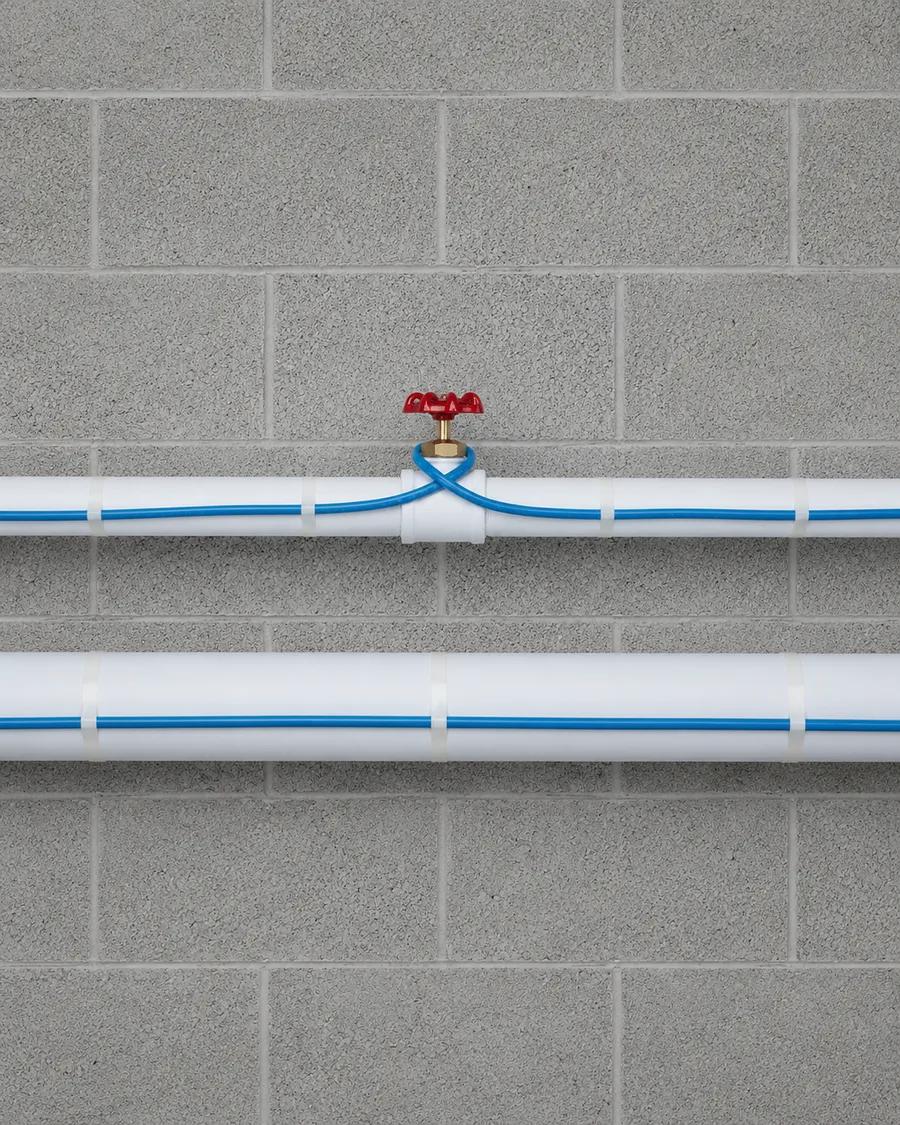
DSR-PFP runs along the pipe, held with fibreglass tape, with an extra loop at valves and fittings, which lose more heat.
Insulate it
At least ½ inch of dry, weatherproofed thermal insulation over the cable keeps its heat on the pipe.
Control it
On longer runs, a thermostat switches the cable on only near freezing, which saves energy and extends its life.
Protect the circuit
Every circuit needs 30 mA ground-fault protection, on a breaker sized from the cable’s maximum circuit length.
The technology: self-regulating cable
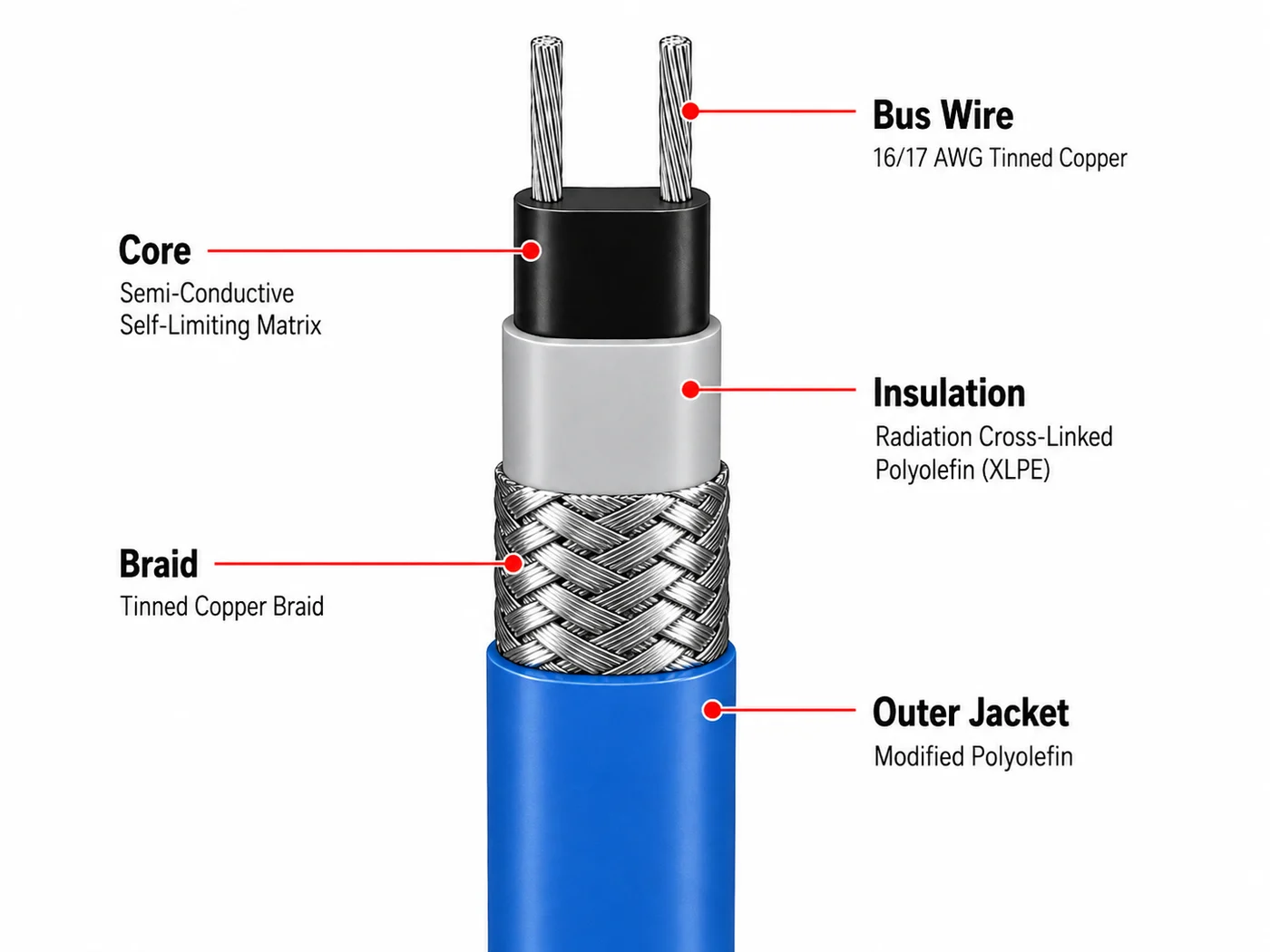
Two copper bus wires run the length of the cable, with a semi-conductive polymer core between them. As the core cools, its resistance drops and it makes more heat; as it warms, its resistance rises and the output falls. Every inch of the cable adjusts on its own.
That is what keeps DSR-PFP from overheating, makes it safe to overlap at valves, and lets you cut it to length on site: the heat comes from the core between the wires, so any length works the same way.
DSR-PFP at a glance
Supply voltage
110–120 V or 208–240 V ac
Power output
3, 5, 8, and 10 W/ft at 10 °C
Pipes
Metal and plastic
Min. installation temp.
−20 °C (−4 °F)
Max. exposure temp.
85 °C (185 °F)
Circuit protection
30 mA ground fault
5 and 8 W/ft come pre-assembled; 3 and 10 W/ft on request. The calculators find the right output and breaker for your pipe.
Cable construction
Five layers, from the inside out:
- Bus wires: two 16 AWG tinned-copper conductors carry the current along the whole length.
- Core: the semi-conductive, self-limiting polymer that makes the heat.
- Insulation: radiation cross-linked polyolefin (XLPE) seals the core electrically.
- Braid: an optional tinned-copper braid gives the ground path that ground-fault protection relies on, and adds mechanical protection.
- Outer jacket: modified polyolefin resists moisture and abrasion.
Our products, and why
Everything for a pipe circuit comes from one system, made to work together: the cable, a kit to connect it to power, kits to splice and branch it, and a seal for the far end.
- DSR-PFP cable for metal and plastic pipes, cut to the length of your run.
- DPPK or DPTK kit to connect it to power.
- DSK and DSTK kits to join cables and branch at tees.
- DEK end seal to close the far end safely.
DSR-PFP
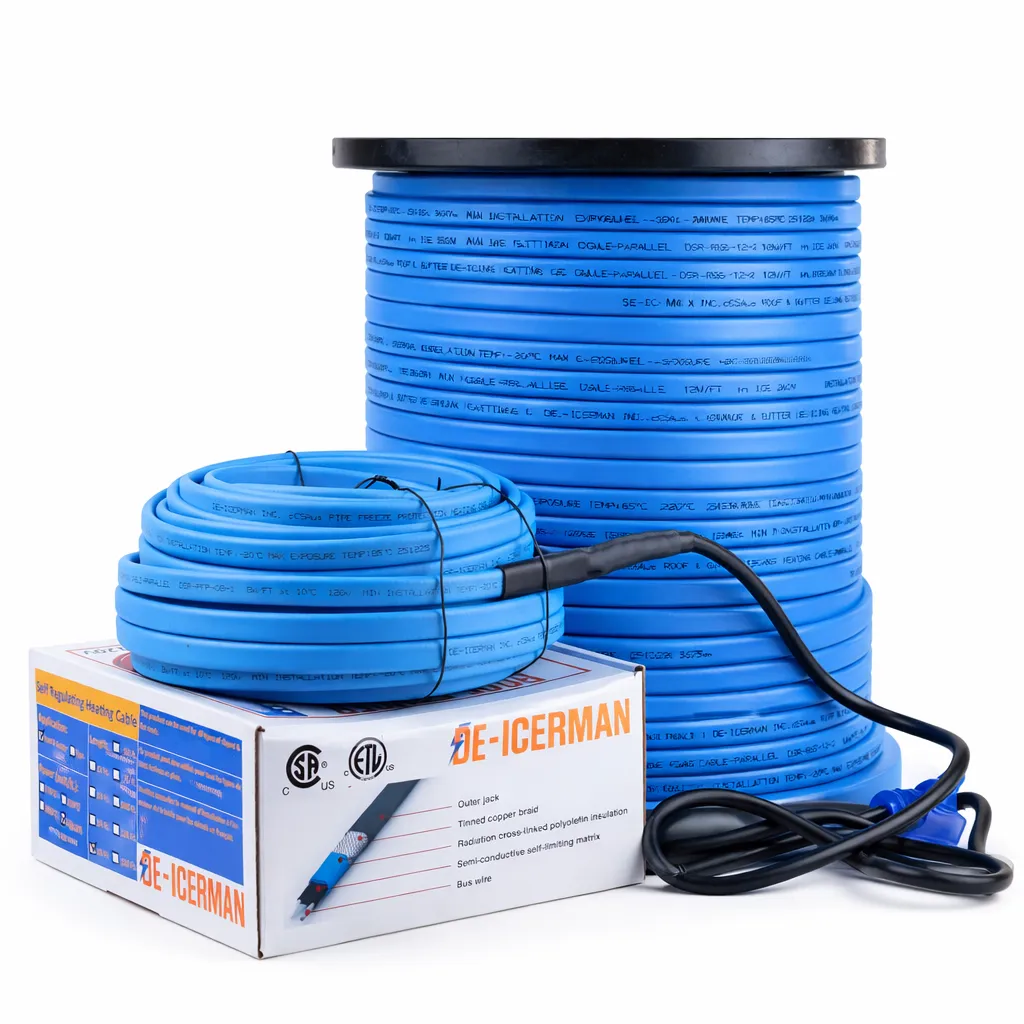
Self-regulating heat-trace cable designed to protect metal and plastic pipes from freezing.
DSTK
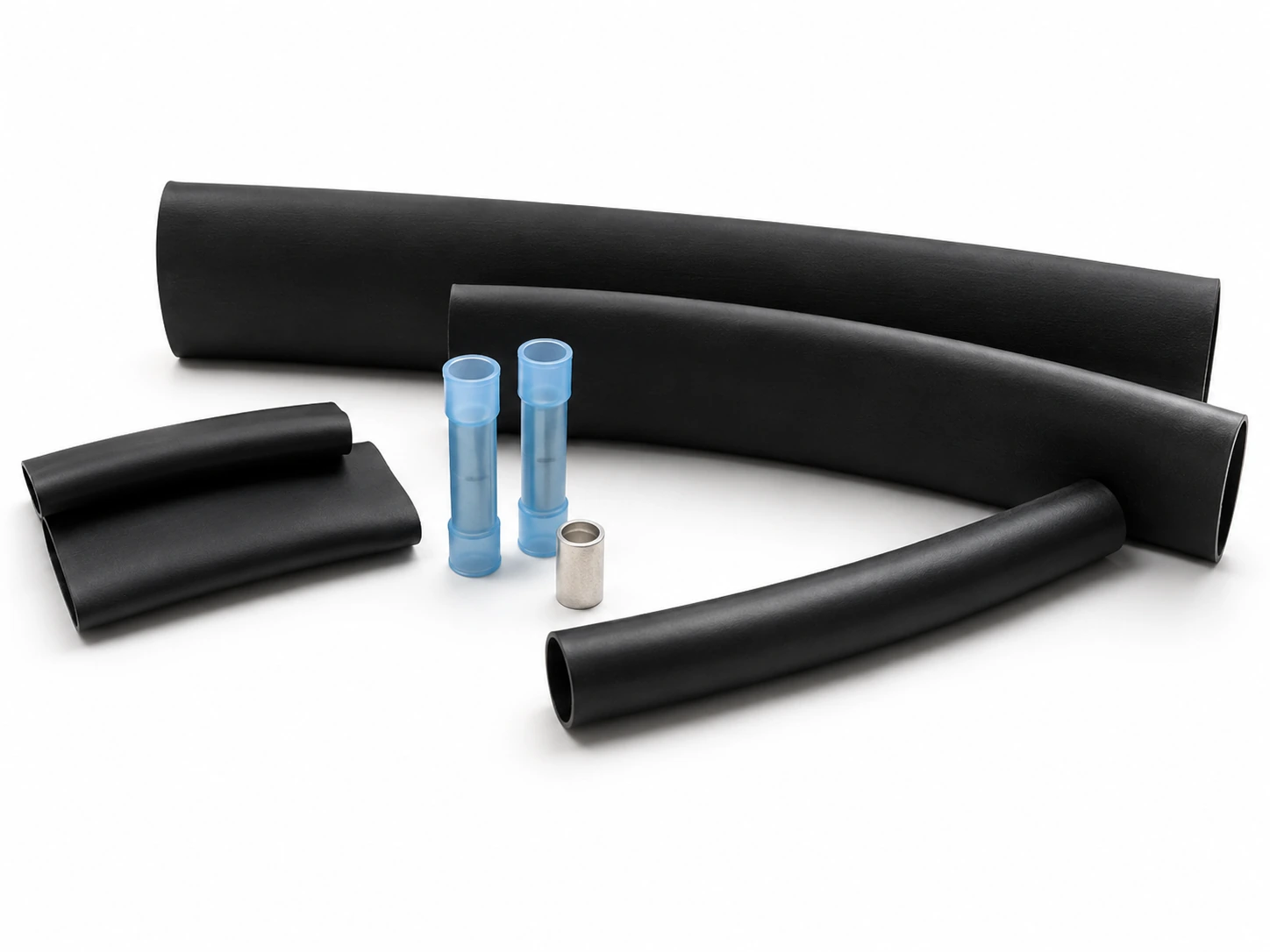
Splice or tee connection kit for joining DSR-PFP and DSR-RGS heating cable runs.
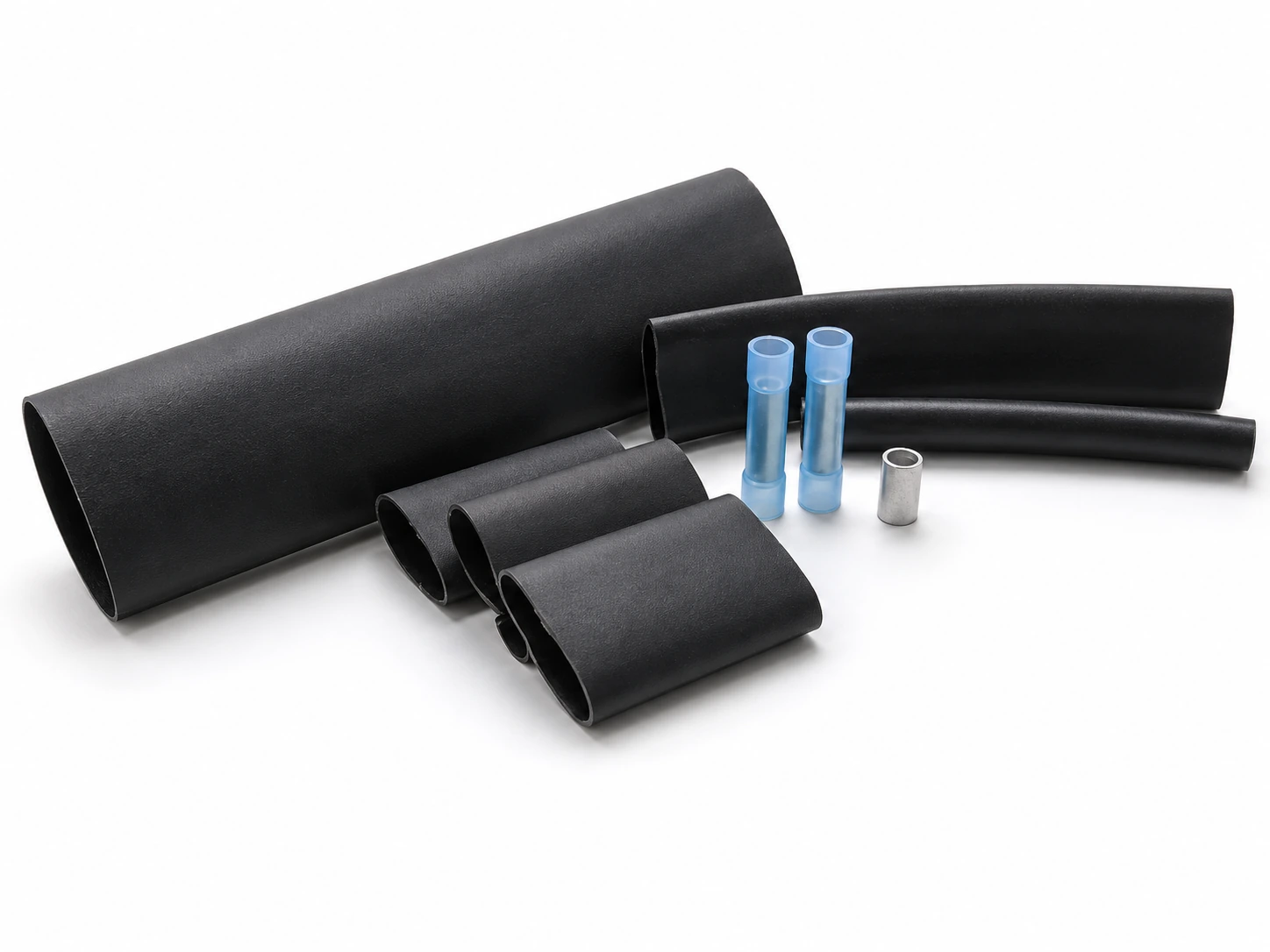
DSK
Splice connection kit for joining DSR-PFP and DSR-RGS heating cable runs.
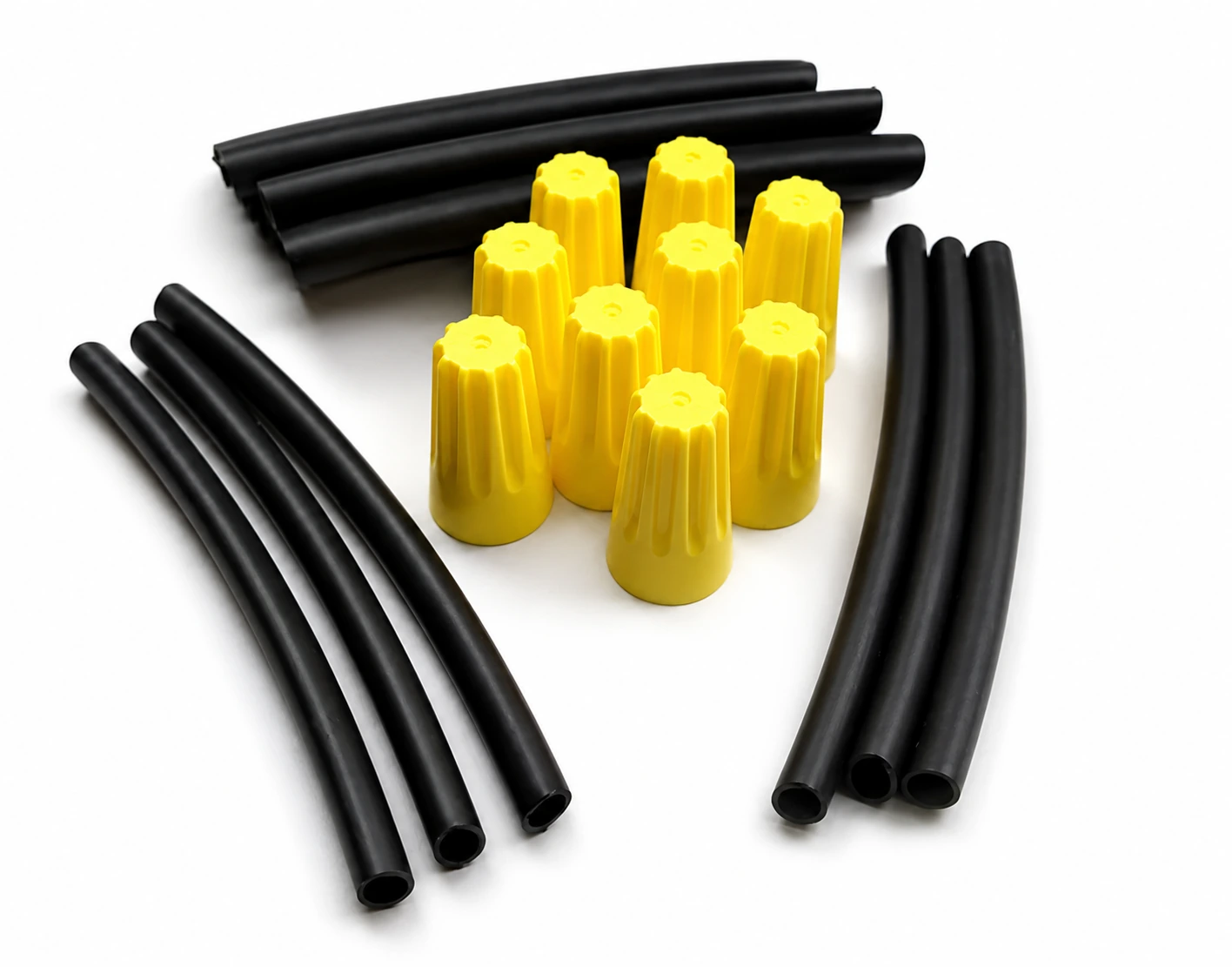
DPTK
Power end termination kit for heating cable installations, terminated inside a listed outlet box.
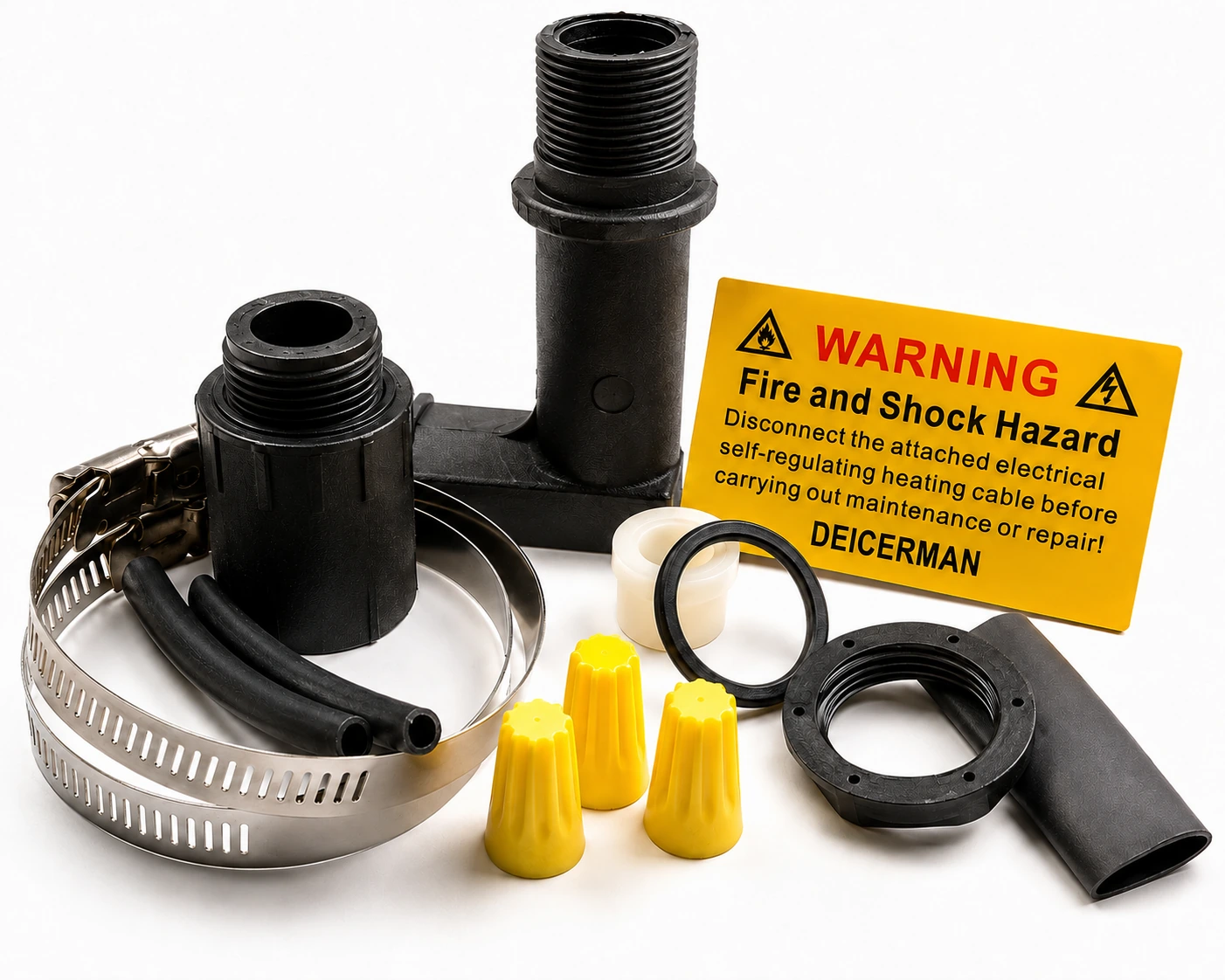
DPPK
Power or splice connection kit for DSR-PFP heating cable runs inside a junction box.
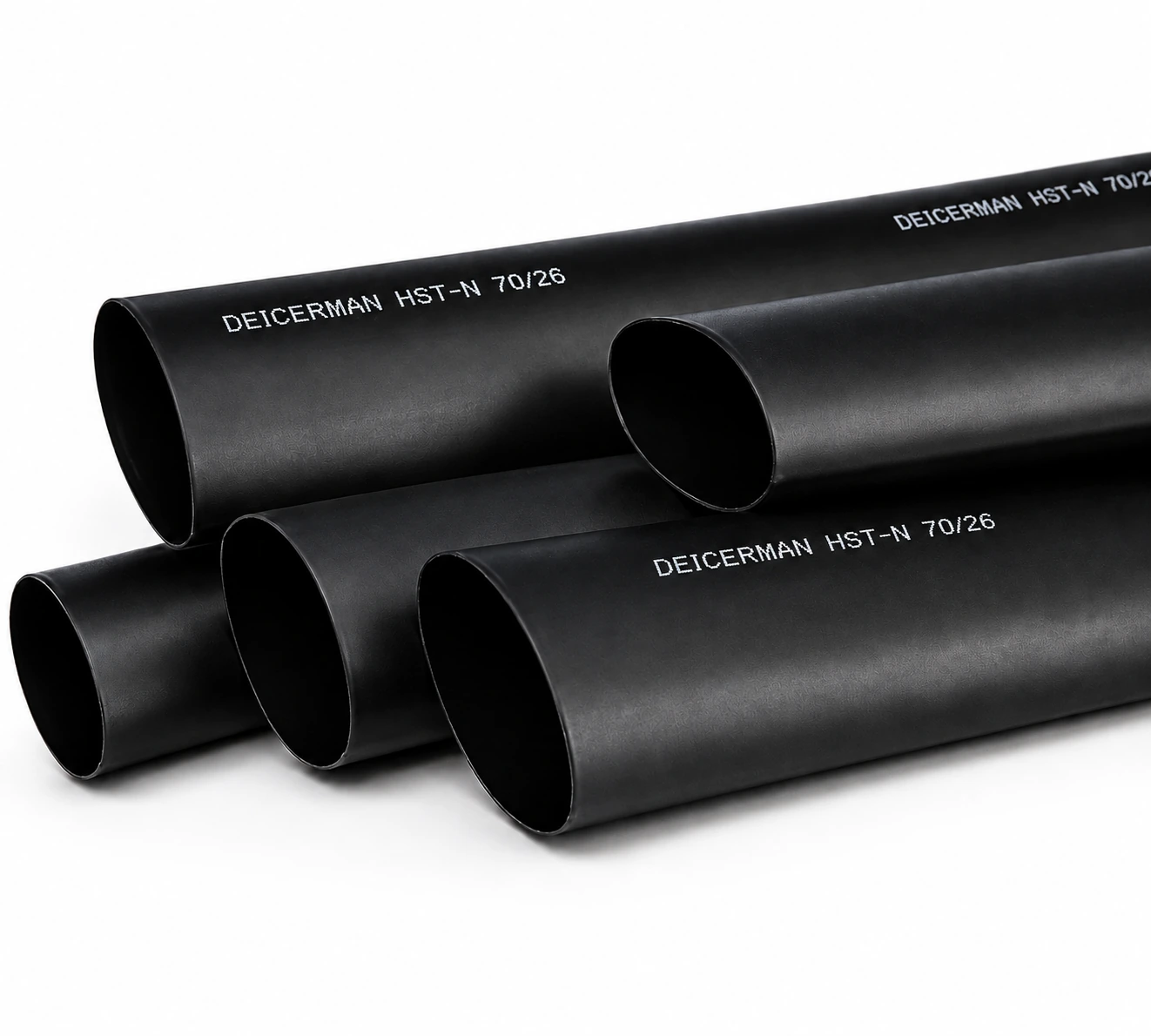
DEK
End seal kit for terminating DSR-PFP and DSR-RGS heating cable ends.
Technical documents
Size your pipe system
Enter your pipe, its length, and the coldest temperature, and the calculators work out the cable and the breaker. Or send us the details and we’ll do it for you.