
Solutions
Outdoor Snow Melting
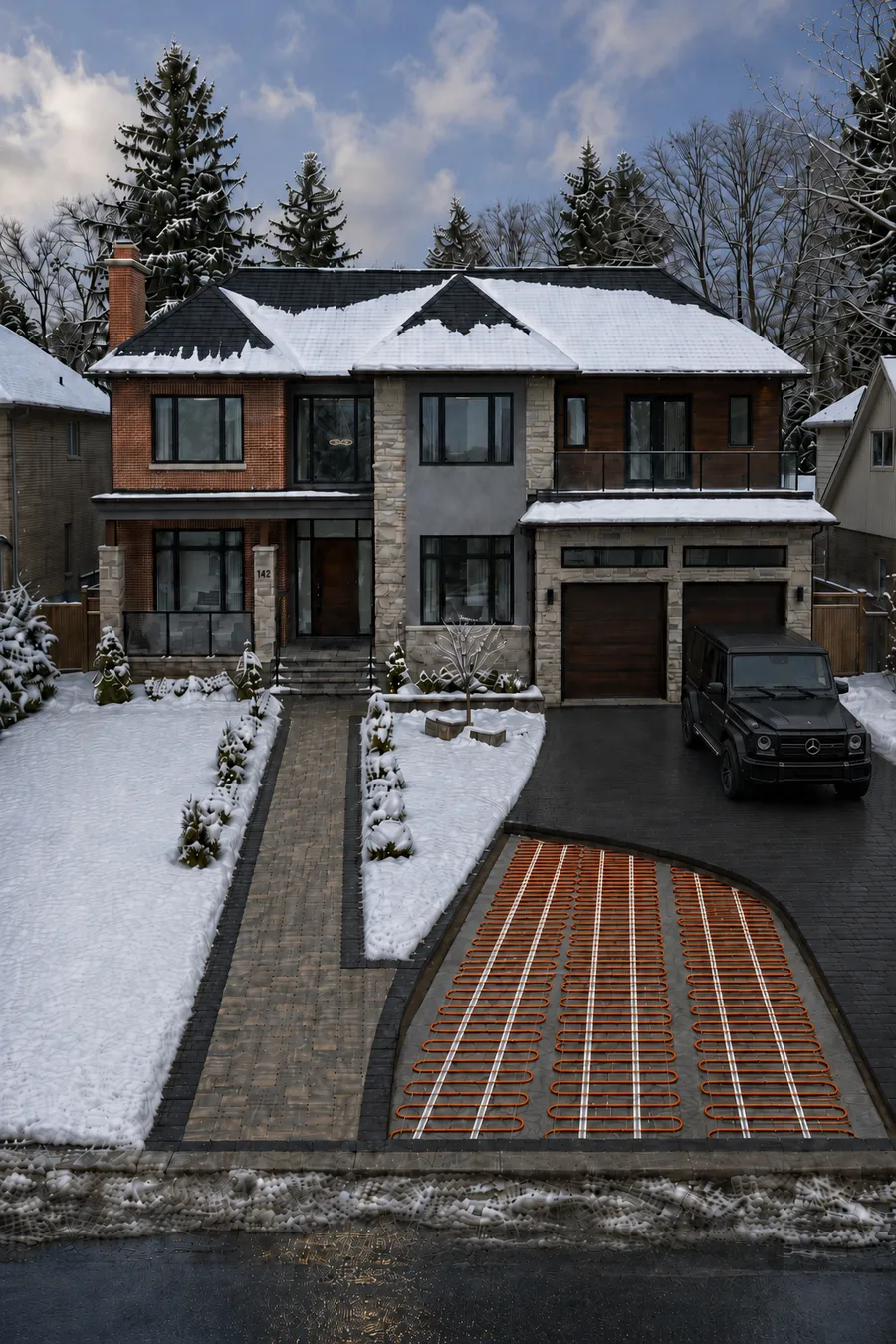
Driveways, walkways, stairs, and ramps that clear themselves: cable embedded in the surface melts snow as it falls, switched on automatically when it’s needed.
The problem: snow and ice underfoot
Shovelling and ploughing are slow, hard work, and they leave a layer that packs down and turns to ice. Salt and de-icers damage concrete, pavers, and the plants beside them, and get tracked indoors.
On stairs, ramps, and sloped driveways, that ice is a fall hazard and a liability for owners.
A snow melting system warms the surface from below and melts snow as it lands, so it never builds up or bonds to the pavement.
How we solve it
A snow melting system has four parts.
Embed the cable
D-SMC is laid in loops 3 to 5 inches apart and embedded in concrete, asphalt, or under pavers, at least 6 inches from the edges.
Size it to the area
Each D-SMC model covers a set area at its spacing. The selector picks the models and spacing that cover yours.
Detect the snow
A controller with snow and temperature sensors starts the system when there’s moisture near freezing, and runs it until the surface is clear.
Protect the circuit
A licensed electrician connects each cable to a dedicated circuit with ground-fault protection, loaded to no more than 80% of the breaker.
The technology: constant-wattage cable
Unlike self-regulating cable, D-SMC puts out the same 12 W/ft at any temperature, so the heat a surface gets is set by the spacing of the loops. Its output doesn’t fall in the cold, which is what melting snow as it falls needs.
Each cable is a fixed-length element: its length sets its resistance and power. It must never be cut, shortened, or spliced, or cross or touch itself. A controller keeps it from running when it isn’t needed.
D-SMC at a glance
Cable output
12 W/ft, constant
Rated voltage
240 V
Element lengths
36–500 ft (11–152 m)
Power density
48 W/ft² at 3 in, 40 W/ft² at 3.6 in
Cold lead
20 ft (6 m)
Warranty
2 years
Never power the cable before it’s fully embedded, even to test it. Check its resistance and insulation before, during, and after installation.
Cable construction
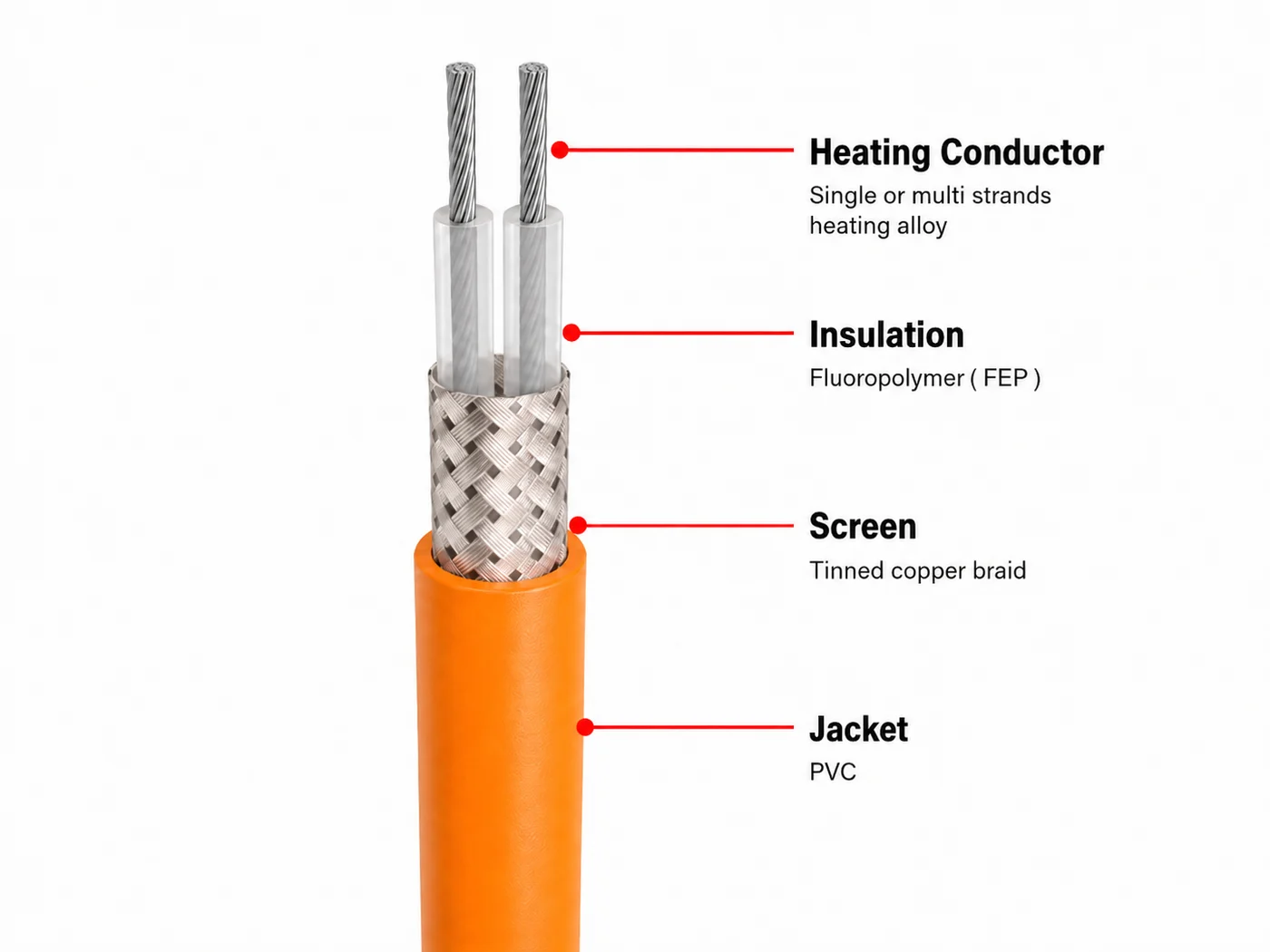
Four layers, from the inside out:
- Heating conductors: two single- or multi-strand heating-alloy conductors make the heat along the whole length. With both in one cable, the element connects to power at one end, through its 20 ft cold lead.
- Insulation: fluoropolymer (FEP), rated to 105 °C, and to 140 °C for a short time under hot asphalt as it’s laid.
- Screen: a tinned-copper braid gives the ground path that ground-fault protection relies on, and protects the conductors.
- Jacket: PVC keeps out moisture and protects the cable while concrete or asphalt is laid over it.
Our products, and why
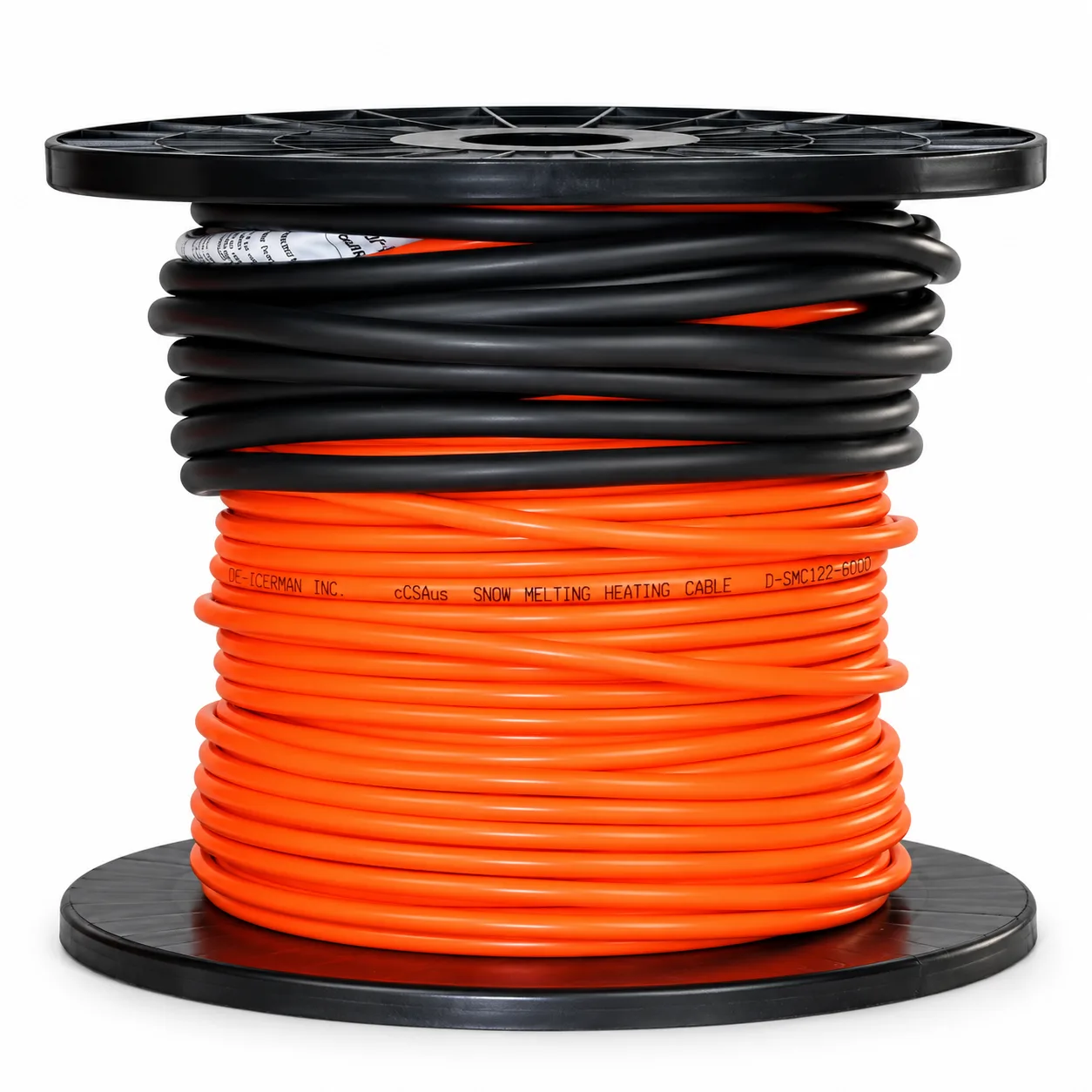
D-SMC is a factory-made heating element with its cold lead attached, in 18 lengths from 36 to 500 ft at 240 V. Installing it takes a layout designed for your area and correct wiring by a licensed electrician. Combine models to cover any area, and add a controller and sensors so the system runs only when it snows.
It’s cCSAus certified and carries a 2-year warranty.
Controls, thermostats, and sensors
A controller and its sensors decide when a snow melting system runs. With them, it starts when snow falls and stops once the surface is clear, which saves energy and extends the system’s life. These are the models we carry, with their documents.
Snow melting controllers · ASE

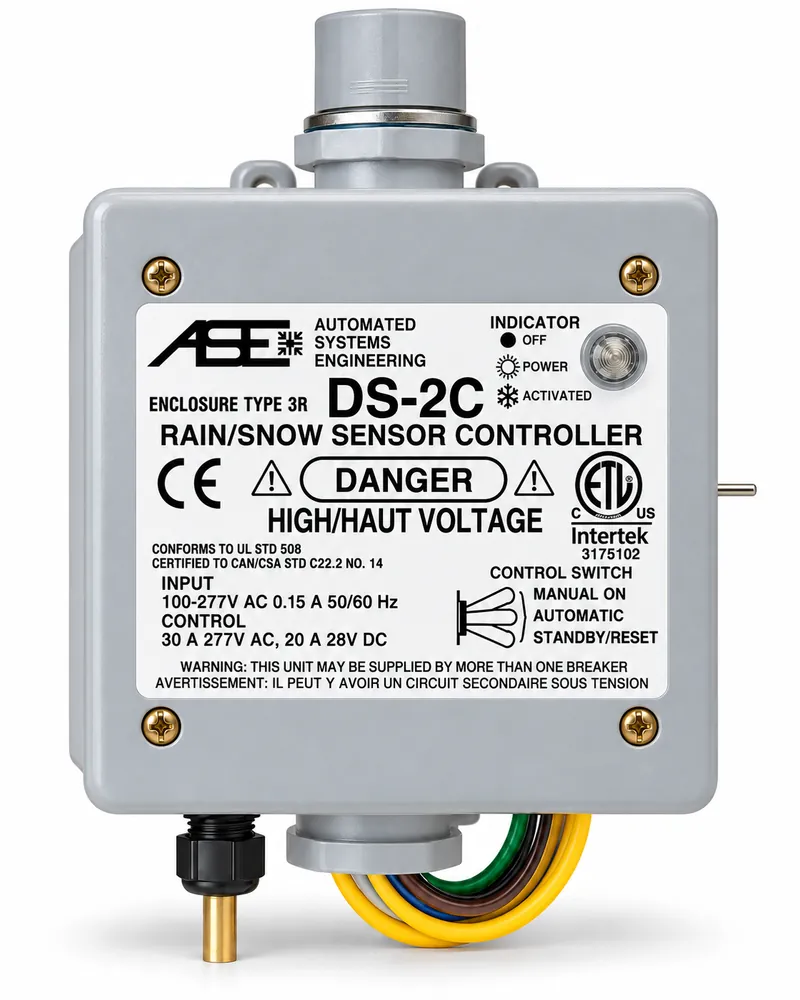
All-in-one rain and snow controllers with the moisture and temperature sensors built in. Mounted outdoors where the sensor sees the open sky, they switch the cable on when it’s wet near freezing, and keep it on for a set time after.
DS-2C
One 30 A relay switches the heating cable directly, without a separate contactor, from a 100–277 V ac supply. Manual-on and standby switches on the front.
View product DS-2C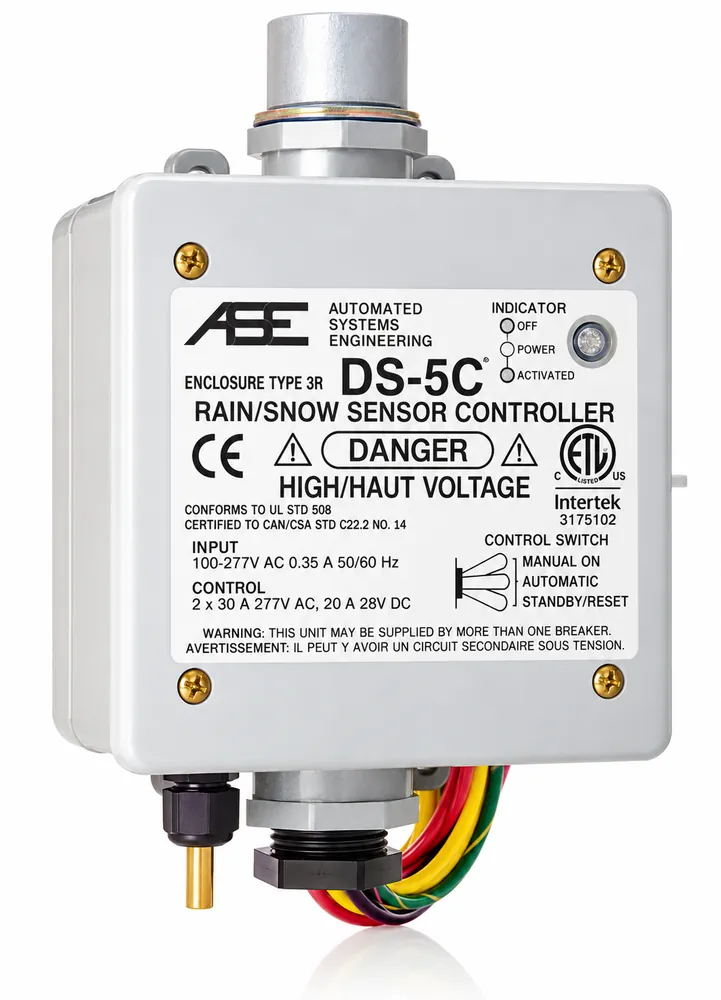
DS-5C
Two independent 30 A relays, each switching its own heating circuit, for a larger area or two zones from one controller.
View product DS-5C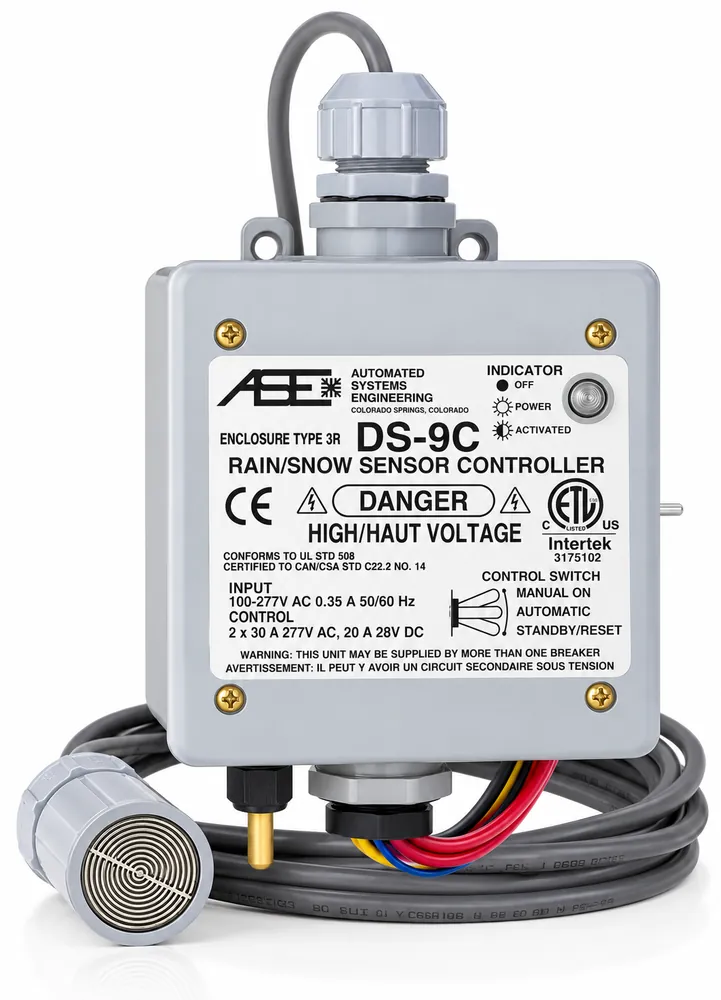
DS-9C
Two 30 A relays and a remote moisture sensor on a cable, which can be mounted in a gutter against the fascia for roof and gutter de-icing, or wherever it best sees the weather.
View product DS-9C
Snow melting thermostats

Rugged mechanical thermostats that switch a system on below a set temperature. Simpler than a snow controller, but they don’t sense moisture, so they run whenever it’s cold.
Mechanical thermostats
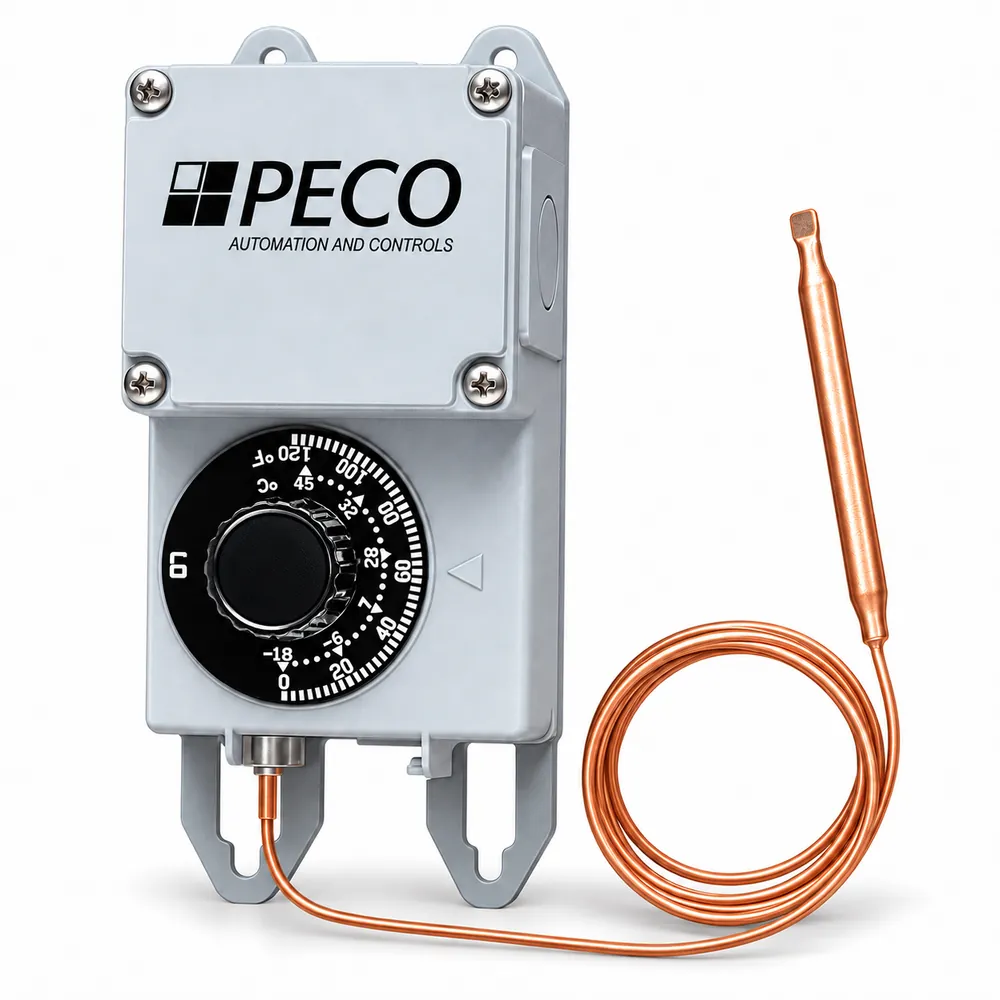
PECO T115 / T109
NEMA 4X weatherproof, corrosion-resistant enclosure with a large dial, UL listed and CSA certified. Switches up to 16 A at 120 V or 12 A at 240 V; the T109 is a two-stage model.
View product PECO T115 / T109
Snow melting controllers · ETI Snow Switch

Control panels that work with ETI’s separate snow and ice sensors (below). They heat only when there’s moisture below 38 °F (3.3 °C), keep heating with a hold-on timer until the surface is clear, and work with self-regulating and constant-wattage cables.
Snow and ice melt control panels
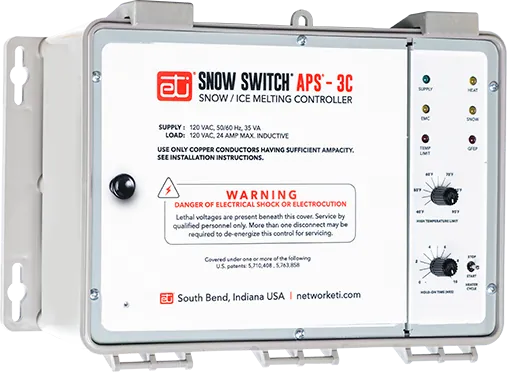
APS-3C
Panel for up to six sensors, with a 0–10 hour hold-on timer and a high-limit thermostat. Switches up to 24 A at 120 or 240 V, or drives contactors for larger loads. No built-in ground-fault protection: choose the APS-4C where it’s needed.
- Data sheet (opens in a new tab)PDF (1.1 MB)
- Manual (APS-3C, APS-4C, SC-40C) (opens in a new tab)PDF (1.6 MB)
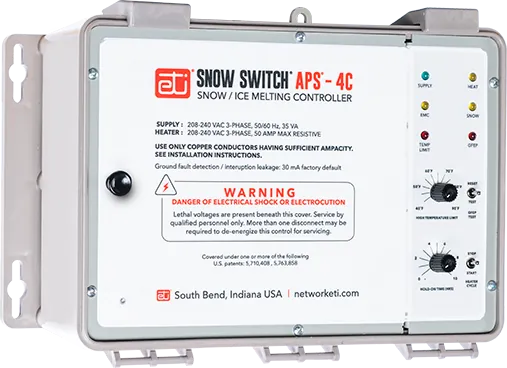
APS-4C
Commercial and industrial panel with built-in, self-testing ground-fault protection (30 mA, or 60 or 120 mA), up to six sensors, and three-phase supplies up to 600 V. Switches up to 50 A, and runs SC-40C satellite contactors for more zones.
- Data sheet (opens in a new tab)PDF (921 KB)
- Manual (APS-3C, APS-4C, SC-40C) (opens in a new tab)PDF (1.6 MB)
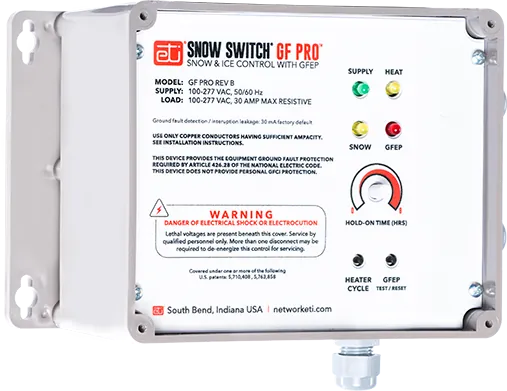
GF Pro
Compact controller for medium-sized systems, with built-in 30 mA ground-fault protection, two sensor inputs, a 0–8 hour hold-on timer, and a NEMA 4X enclosure. 100–277 V ac, up to 30 A.
View product GF Pro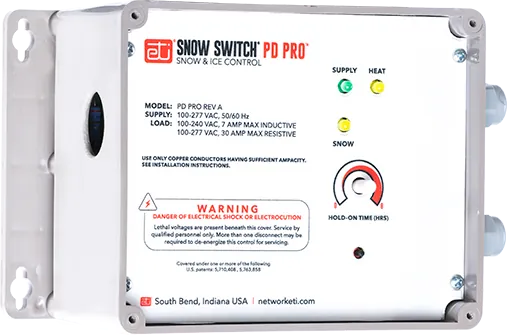
PD Pro
For systems with their own ground-fault protection: two sensor inputs, a 0–8 hour hold-on timer, and a NEMA 4X enclosure. Switches up to 30 A, or drives a contactor.
View product PD Pro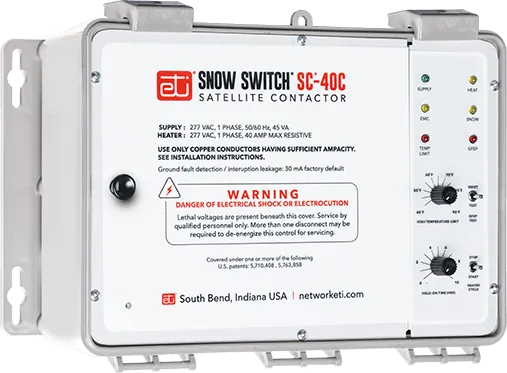
SC-40C
Satellite contactor for large systems: an APS-4C acts as the master, and each SC-40C runs one more heating zone with its own 30 mA ground-fault protection and hold-on timer, so one faulty circuit doesn’t stop the rest.
- Data sheet (opens in a new tab)PDF (808 KB)
- Manual (APS-3C, APS-4C, SC-40C) (opens in a new tab)PDF (1.6 MB)
Snow melting sensors
Sensors tell a controller when to heat. Aerial sensors mount on a mast or roof and detect falling and blowing snow; pavement and gutter sensors sit where the ice forms.
Aerial
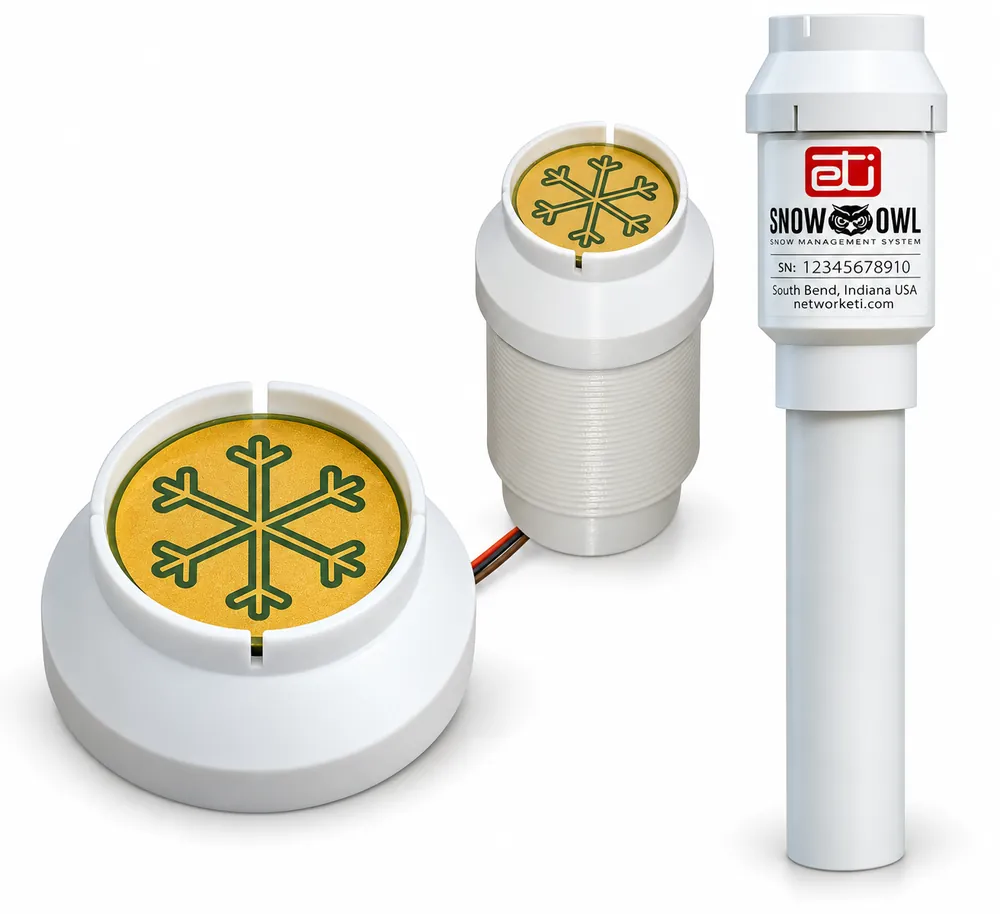
Snow Owl
Slim, low-voltage (24 V) aerial snow sensor on ¾-inch conduit, up to 2,000 ft from the controller. It calls for heat when it senses snow below 38 °F (3.3 °C) and holds on until melting is done. Works with ETI controllers and building automation.
- Installation guide (opens in a new tab)PDF (702 KB)
- Data sheet (opens in a new tab)PDF (337 KB)
- Manual (opens in a new tab)PDF (450 KB)
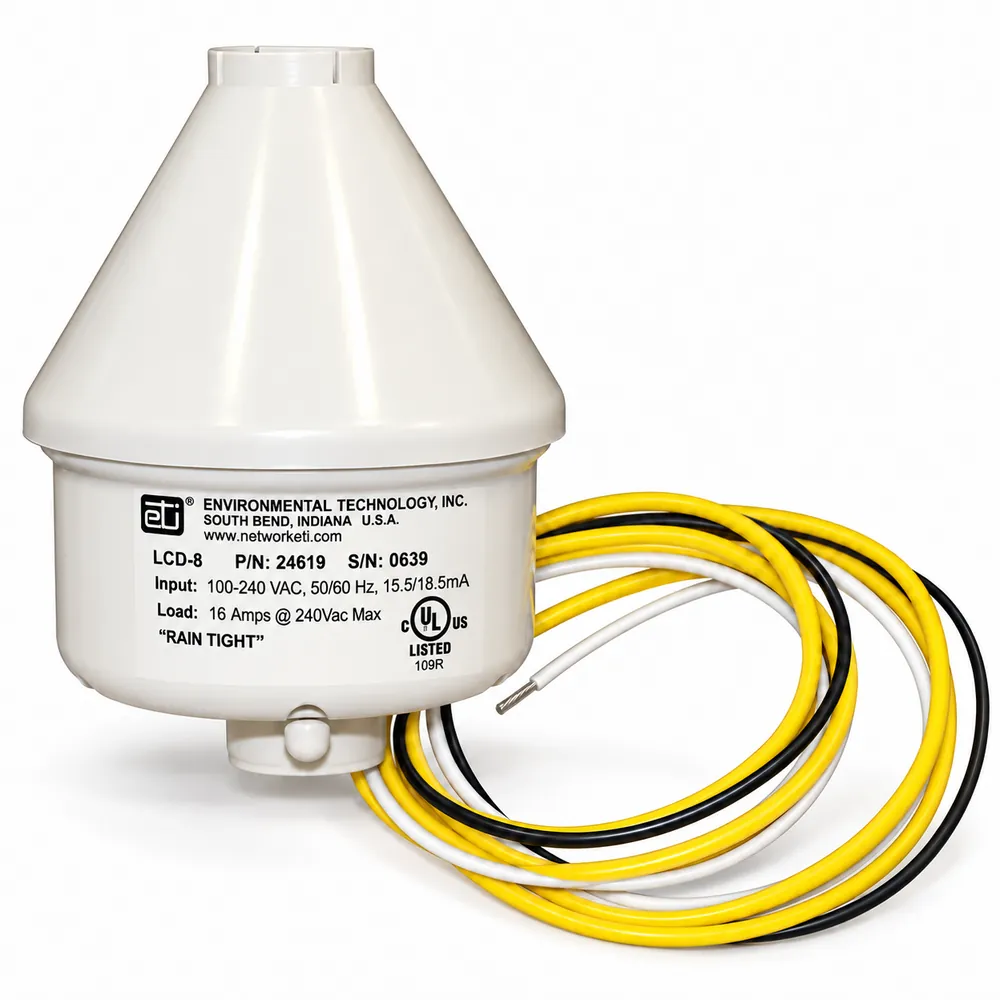
LCD-8
Aerial snow sensor and controller in one, for small systems: it heats below an adjustable set point (38 °F / 3.3 °C by default) with a 3-hour default hold-on, and switches up to 16 A from 100–240 V ac. Built-in self-test.
View product LCD-8
Pavement and gutter
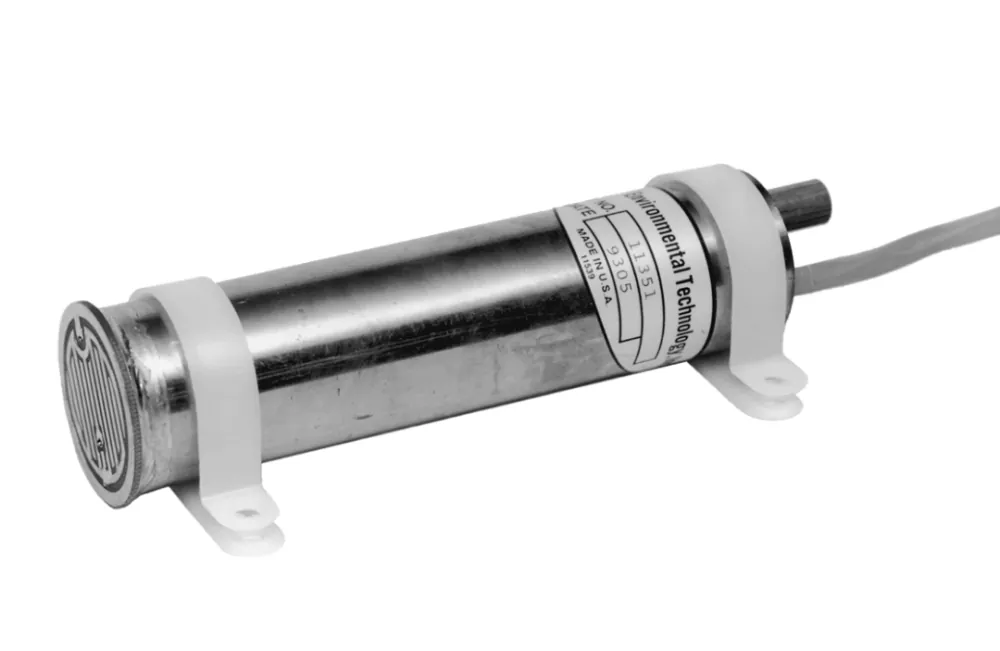
GIT-1
Gutter ice sensor that mounts in a gutter or downspout and senses moisture and temperature where the ice actually forms. Runs the heaters only below 38 °F (3.3 °C), up to 2,000 ft from an APS-3C or APS-4C.
View product GIT-1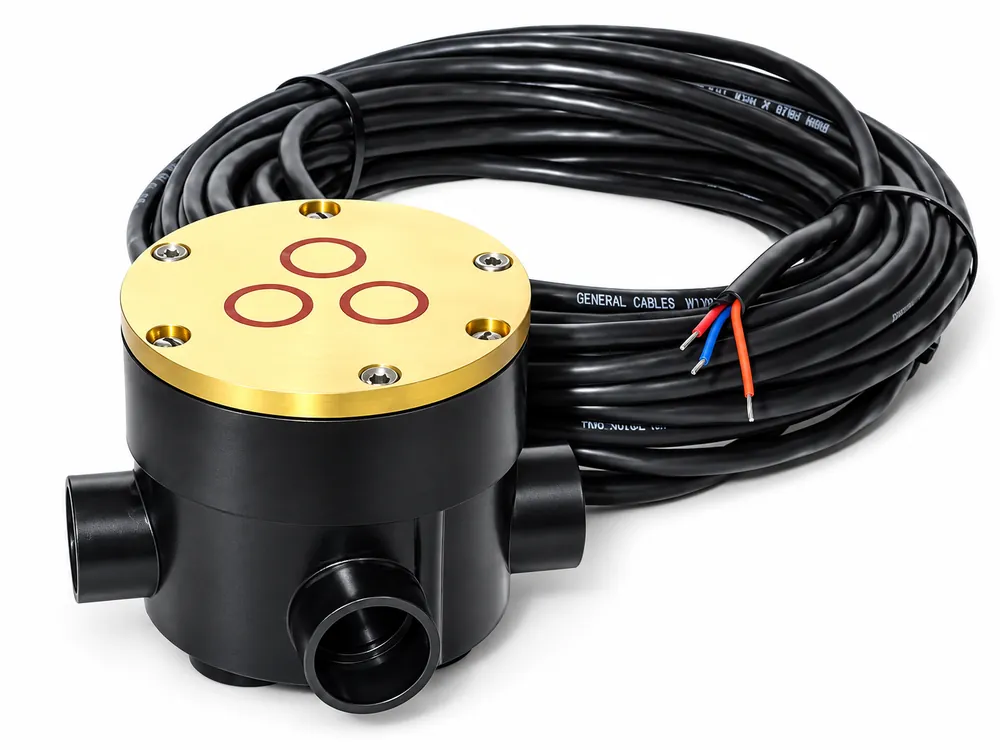
HSC-24
Pavement-mounted snow and ice sensor, set level with the surface between the heating cables. Self-contained, with its own relay output, it calls for heat while there’s moisture on the pavement below 38 °F (3.3 °C). Needs a pavement sensor housing, sold separately.
- Installation manual (Rev A) (opens in a new tab)PDF (478 KB)
- Installation manual (earlier edition) (opens in a new tab)PDF (444 KB)
Technical documents
Size your snow melting system
Enter the area you want to heat, and the selector finds the D-SMC cables and the spacing that cover it. Or send us a sketch and we’ll design it for you.